Swelling Can Be Normal
Early fullness, puffiness, bruising or firmness around the repair can occur as part of healing.

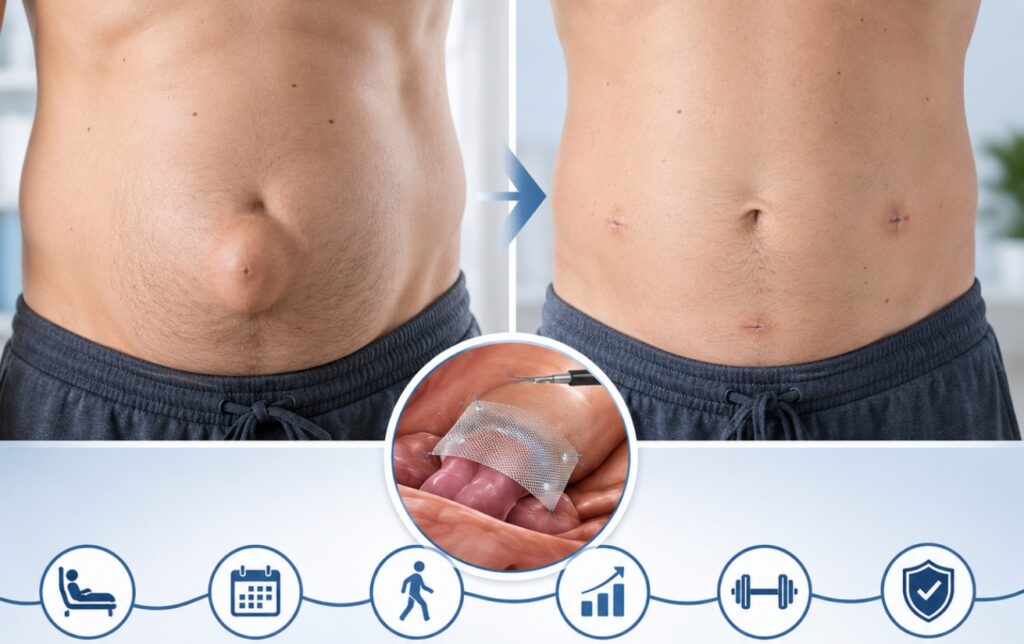
If you are preparing for hernia repair, it is normal to wonder what your abdomen will actually look and feel like afterward. Patients often ask when the hernia bulge should disappear, how much swelling is normal, what the incisions may look like, and how long it takes before the result is easier to judge.
This guide follows the healing process from the first few days through the following months, including swelling, scars, activity, recurrence concerns and what changes patients may notice after inguinal, umbilical, ventral or incisional hernia repair.
For the full procedure overview, visit our Hernia Repair Surgery in Hollywood, FL page, or learn more about Dr. Sergey Terushkin, MD, FACS.
The main goal of hernia surgery is to repair the weakness or defect in the abdominal wall. As healing progresses, the visible or palpable bulge may become less noticeable, discomfort can improve, and patients gradually return to normal activity.
Hernia repair is not cosmetic body contouring. A smoother or flatter appearance can happen after the hernia is repaired and swelling settles, but the purpose of the surgery is functional repair—not creating a tummy-tuck result.

Minimally invasive hernia surgery with Dr. Sergey Terushkin, MD, FACS at Florida Surgery And Weight Loss Center in Hollywood, FL.
Results are about function first, appearance second.
For many patients, the most noticeable change is that the hernia bulge is reduced or no longer protrudes the way it did before surgery. Pressure, pulling or discomfort may also improve as healing progresses.
Immediately after surgery, however, the area can look more swollen or uneven than expected. That does not automatically mean the repair failed. Early swelling, bruising and firmness can temporarily hide the result.
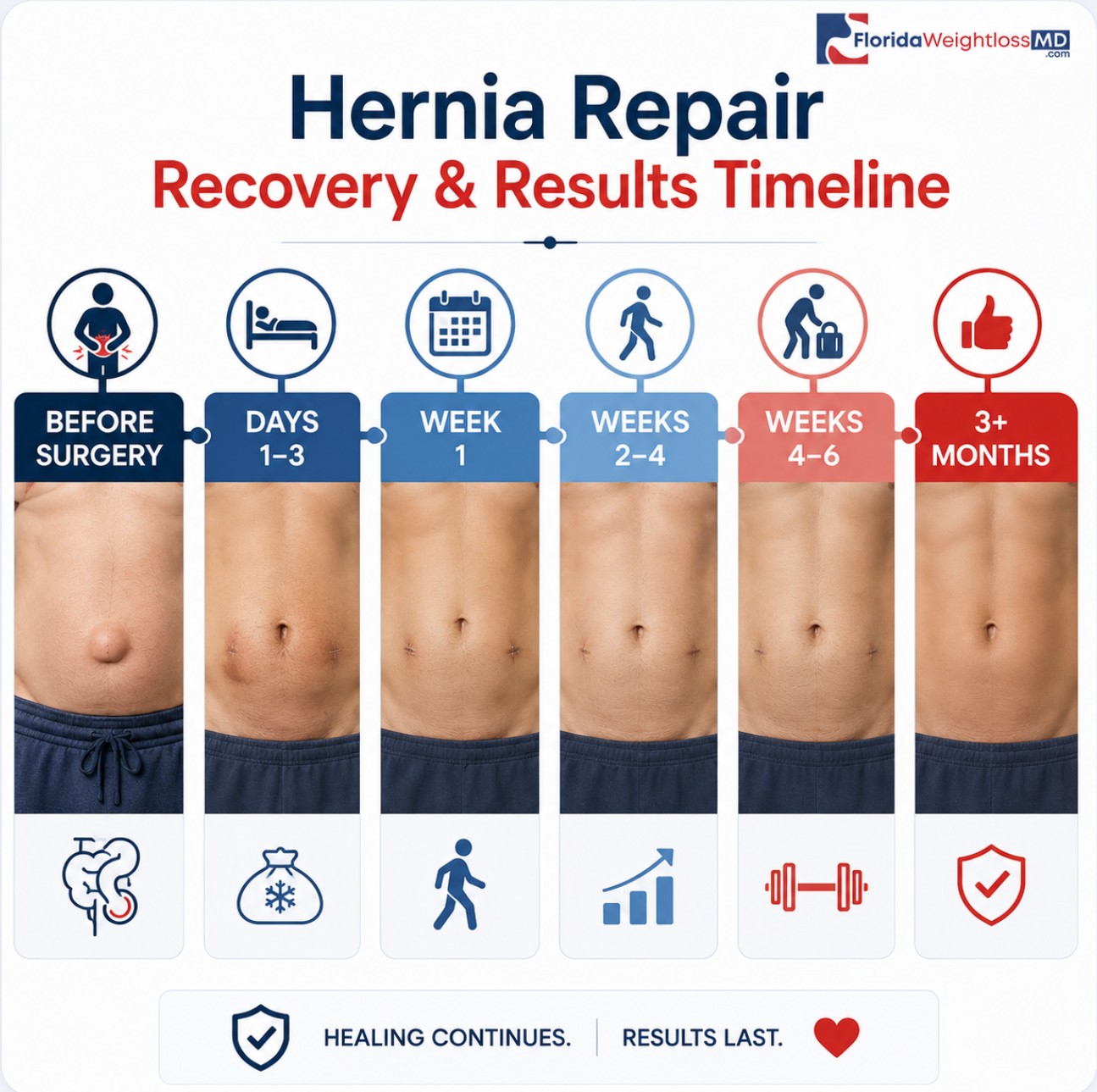
Hernia repair recovery and healing timeline showing typical stages from before surgery through the first days, weeks 1–6 and 3+ months. Individual recovery varies.
A practical overview from surgery through longer-term recovery.
The area may feel sore, tight or swollen. Small incisions can look red or bruised. Gentle walking and following postoperative instructions are priorities.
Many patients feel better than during the first few days, but swelling can still be obvious. The abdomen may not yet look “normal.”
Bruising and swelling often continue to improve. Some patients return to desk work or light activity depending on the repair and job demands.
Many patients are gradually returning toward their usual routine. Lifting and exercise should still follow the surgeon’s specific restrictions.
The repaired area often looks and feels more settled. Residual firmness or sensitivity can continue to improve.
Incisions continue maturing and the abdominal wall result becomes more stable. Scar appearance can continue changing for many months.
The visible bulge may improve quickly, but swelling can make the area confusing early on.
After a successful repair, the hernia itself should no longer protrude through the abdominal wall defect in the same way. But early postoperative swelling, fluid, bruising or tissue firmness can create a temporary lump or fullness.
If a new bulge is growing, painful, persistent or concerning, contact the surgical team rather than trying to decide on your own whether it is normal swelling or recurrence.
Patients often worry that any postoperative lump means the hernia has returned.
Early fullness, puffiness, bruising or firmness around the repair can occur as part of healing.
A persistent or enlarging bulge, new pain, or symptoms that worsen rather than improve should be discussed with your surgeon.
If you are unsure what you are seeing or feeling after surgery, calling the clinic is safer than relying on online photos or another patient’s recovery timeline.
Scar size and location depend on the repair technique.
Minimally invasive and laparoscopic repairs typically use several smaller incisions, while open repair may require a larger incision over or near the hernia. Incisions can initially look pink, red, raised or firm and then gradually soften and fade.
Scar appearance varies by skin type, healing, incision location, sun exposure, wound complications and other factors.
Yes. The location and size of the hernia influence both appearance and recovery.
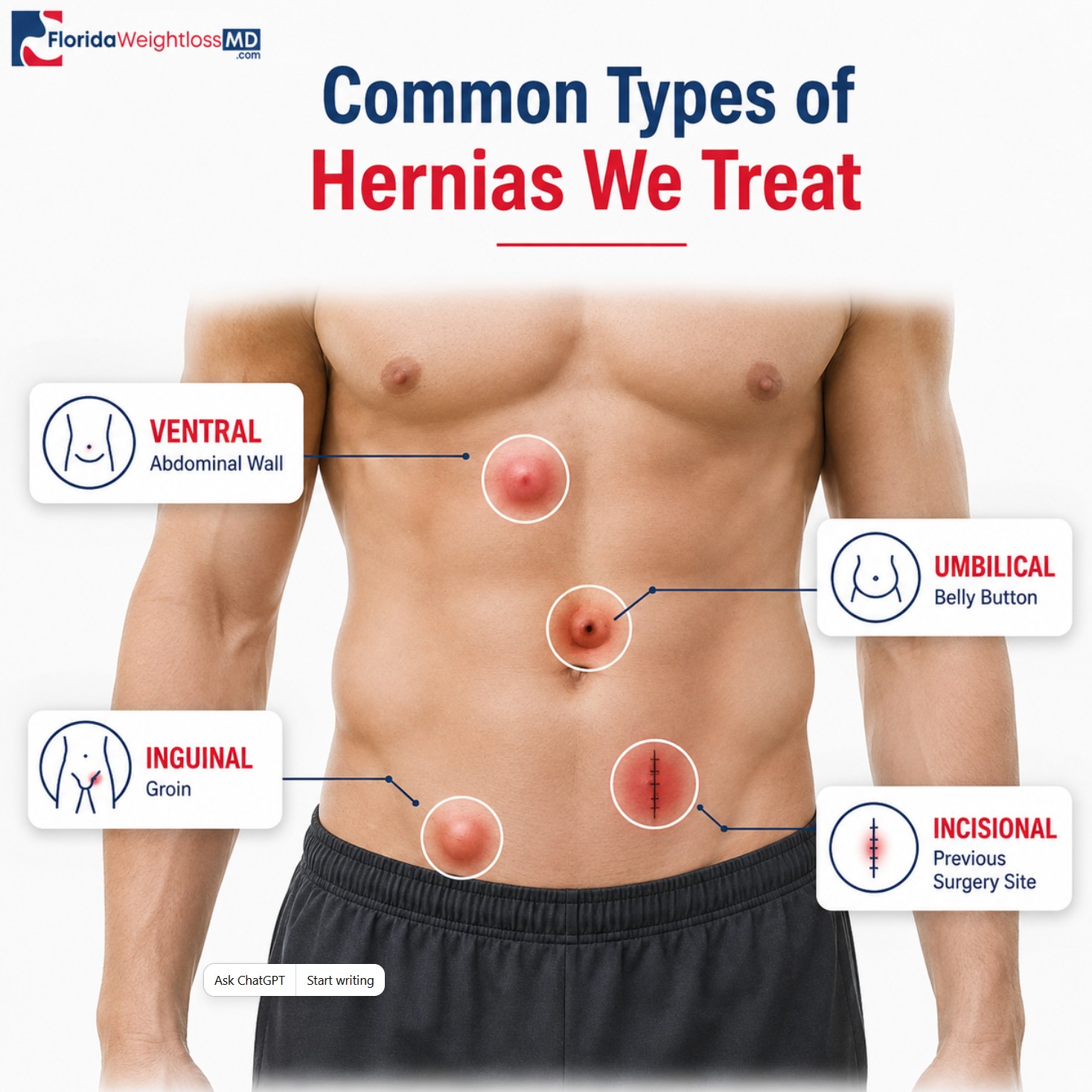
Common hernia locations treated by Dr. Sergey Terushkin, MD, FACS in Hollywood, FL.
The groin bulge may become less noticeable after repair, while soreness and swelling gradually improve.
The belly-button area may look swollen early, especially if the hernia was prominent before surgery.
Larger abdominal wall hernias may need more time before the contour and firmness settle.
Previous scars and prior surgery can affect both the repair strategy and the postoperative appearance.
“Recovery is individual—follow your surgeon’s instructions closely. Doing so supports proper healing and helps reduce the risk of complications.”Dr. Sergey Terushkin, MD, FACS
Recovery depends on the repair and the physical demands of your daily life.
Some patients return to light work sooner than those with physically demanding jobs.
Do not drive while taking impairing pain medication or until you can safely move and react.
Lifting restrictions vary by repair. Follow Dr. Terushkin’s instructions rather than a generic online timeline.
Walking usually returns before strenuous training, abdominal exercise or heavy lifting.
Results and recovery are easier to understand when patients know who is guiding the surgical plan.
Dr. Sergey Terushkin, MD, FACS evaluates and treats inguinal, umbilical, ventral and incisional hernias at Florida Surgery And Weight Loss Center in Hollywood, FL. His approach is to first identify the hernia, explain whether surgery is appropriate, and then discuss the repair technique and realistic recovery expectations.
If you are still deciding whether you need surgery—or want to understand what type of surgeon treats your hernia—read our Hernia Surgeon in Hollywood, FL guide.
Hernia repair is generally performed for a medical condition rather than cosmetic reasons. Florida Surgery And Weight Loss Center works with major insurance plans, and our team can help verify benefits and explain authorization requirements.
Affordable self-pay and financing options are also available when needed.
Verify Insurance: (954) 551-3508Hollywood is the primary location. Dr. Sergey Terushkin also sees patients from Hallandale Beach, Dania Beach, Aventura, Sunny Isles Beach, Pembroke Pines, Miramar, Davie, Fort Lauderdale, Plantation, North Miami, Miami Gardens and surrounding South Florida communities.
Multilingual patient support is available in English, Spanish, Ukrainian and Russian.
Dr. Sergey Terushkin, MD, FACS answers common questions patients ask about swelling, scars, activity and what a normal result may look like after hernia repair.
Dr. Terushkin: “Swelling is very common after hernia repair, especially during the first days and weeks. I tell patients not to judge the final result too early. The repaired area needs time to settle, and swelling should generally improve gradually. If swelling is increasing, very painful, red, or otherwise concerning, call the office so we can evaluate it.”
Dr. Terushkin: “Firmness can be part of normal healing. Scar tissue, swelling, and the tissues around the repair can feel different for a while. What matters is the pattern: if the lump is enlarging, becoming more painful, or appears after you initially felt better, I want to know about it.”
Dr. Terushkin: “The original hernia bulge should no longer push through the repaired defect in the same way, but postoperative swelling can temporarily create fullness in the same area. That is why the first few days are not the right time to compare your abdomen with a final result photo.”
Dr. Terushkin: “Sometimes the abdomen looks smoother after the hernia bulge is repaired and swelling resolves. But hernia repair is not a cosmetic body-contouring procedure. My primary goal is to repair the abdominal wall safely and restore function—not to perform a tummy tuck.”
Dr. Terushkin: “Laparoscopic repair usually uses several small incisions. Early scars can look pink, red, raised, or firm. Over time they generally soften and fade, although every patient heals differently.”
Dr. Terushkin: “The first week is too early. Many patients look and feel much more settled over the next several weeks, but tissue healing and scar maturation continue for months. I prefer patients to focus on steady improvement rather than a single date on the calendar.”
Dr. Terushkin: “A new or enlarging bulge, recurrent pressure or pain, or symptoms that return after initial improvement should be evaluated. Not every lump is a recurrence, so I do not recommend trying to diagnose it from a photo or online discussion.”
Dr. Terushkin: “That depends on the type of repair and the job. Someone who works at a desk may return sooner than someone who lifts, bends, climbs, or performs heavy physical work. We give return-to-work guidance based on the actual repair and the patient’s job.”
Dr. Terushkin: “Walking usually returns before strenuous exercise. Heavy lifting and abdominal training need a more gradual return. I want patients to follow their individual postoperative instructions rather than copy another person’s timeline.”
Dr. Terushkin: “Comfort is a good guide, but positioning can depend on where the hernia was repaired and how extensive the operation was. If a position causes pulling or significant discomfort, change positions and follow the instructions we give you after surgery.”
Dr. Terushkin: “Call if pain is worsening instead of improving, swelling is increasing, the incision becomes very red or starts draining, you develop fever, or you notice a new concerning bulge. Severe or rapidly worsening symptoms may require urgent medical evaluation.”
Dr. Terushkin: “Some tightness or pulling can occur as the abdominal wall heals and the tissues adjust. It should generally become less noticeable with time. Persistent or worsening symptoms deserve an evaluation.”
“My goal is for patients to understand what is normal during recovery and to feel comfortable calling us when something does not seem right. A good hernia repair is not just the operation—it is also the follow-up and the recovery plan.”Suggested Dr. Sergey Terushkin, MD, FACS patient-education quote — physician approval recommended before publication.
If you already have a hernia, are considering surgery, or are unsure whether what you are seeing after a repair is normal, Dr. Sergey Terushkin, MD, FACS can evaluate your situation at Florida Surgery And Weight Loss Center in Hollywood, FL.
You do not need to know whether you need laparoscopic, robotic-assisted or open surgery before making the appointment. The consultation is where the diagnosis and treatment plan are clarified. You can also learn more about Dr. Sergey Terushkin and his approach to hernia repair.


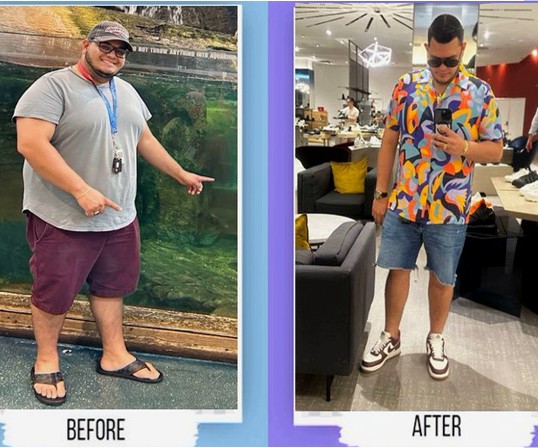
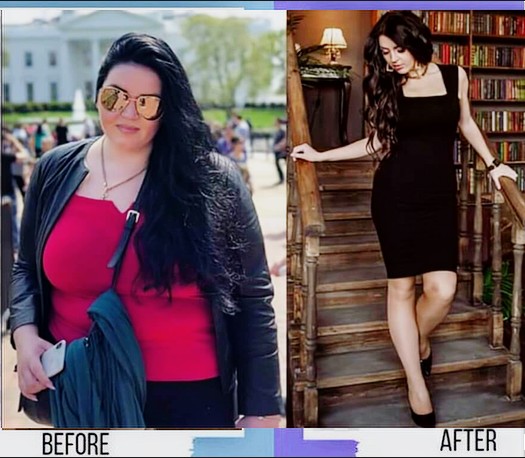
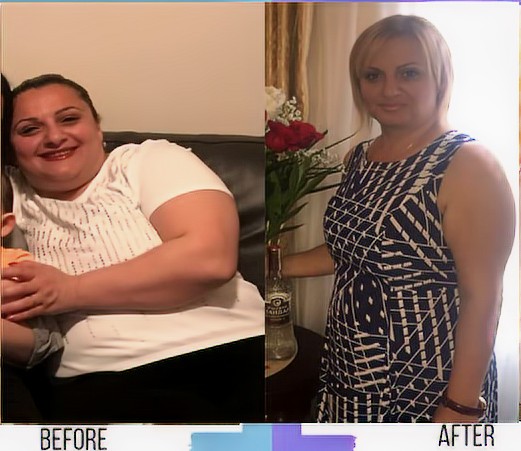
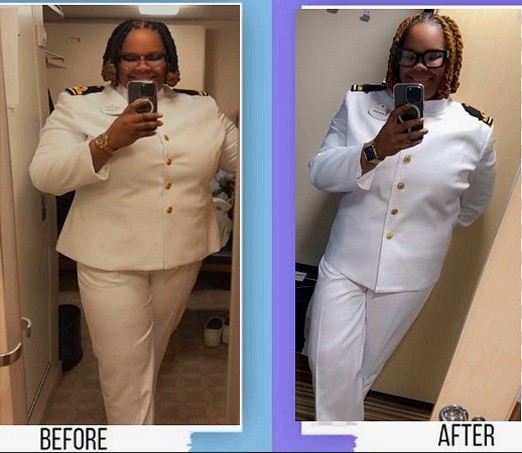
Real people, REAL RESULTS! Check out a few of the many people that we have helped reach their ideal weight goals over the years.