

Explore
Use our free Waist-to-Hip Ratio Calculator online to estimate your waist-to-hip ratio, understand abdominal fat distribution, and review general metabolic health risk ranges from home. Waist-to-hip ratio, also called WHR, can help identify central obesity and visceral belly fat that BMI alone may miss.
Florida Surgery and Weight Loss Center uses educational tools like WHR, BMI, body composition, and medical history to help eligible patients explore physician-guided weight loss options, including lifestyle support, GLP-1 medications, GLP-1/GIP therapies, and bariatric evaluation when clinically appropriate.
Florida Surgery and Weight Loss Center
Enter your waist and hip measurements, then press calculate.
🟢 WHR compares waist circumference to hip circumference.
🟢 WHR can help estimate abdominal fat distribution.
🟢 Higher WHR may suggest higher cardiometabolic risk.
🟢 BMI and WHR are different tools and should not be interpreted alone.
🟢 A provider can help interpret WHR together with BMI, lab work, medical history, and treatment goals.
This free waist-to-hip ratio calculator is for educational purposes only and does not replace professional medical advice or evaluation.
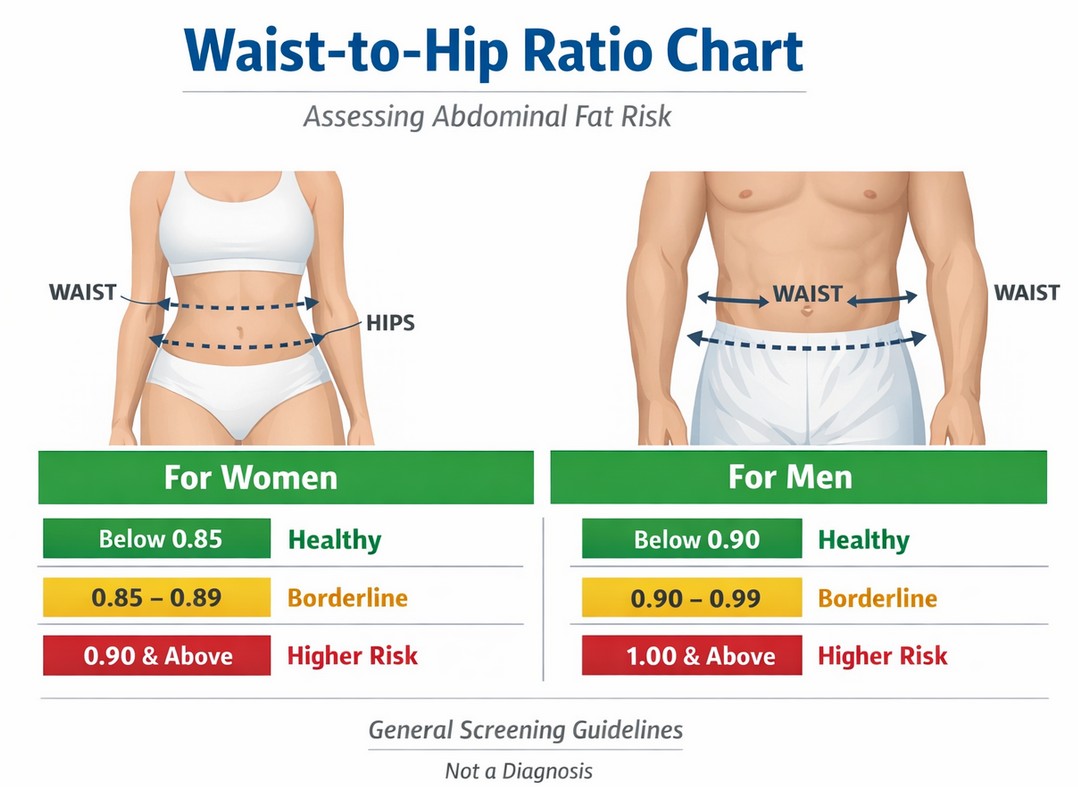
This waist-to-hip ratio chart is commonly used as a general screening guide to help interpret WHR results for women and men. These ranges can help estimate abdominal fat–related risk, but they should not replace medical evaluation.
| Group | Lower Risk | Moderate / Borderline | Higher Risk |
|---|---|---|---|
| Women | Below 0.80 | 0.80 – 0.84 | 0.85 and above |
| Men | Below 0.90 | 0.90 – 0.99 | 1.00 and above |
Women often store more fat around the hips and thighs. A rising waist-to-hip ratio in women may suggest increasing abdominal fat, which can be associated with metabolic and cardiovascular risk.
Men are more likely to store fat in the abdominal area. A higher waist-to-hip ratio in men may be associated with insulin resistance, metabolic syndrome, and cardiovascular risk factors.

Your waist-to-hip ratio compares your waist circumference to your hip circumference. It is one way to estimate abdominal fat distribution, which may play a role in insulin resistance, type 2 diabetes risk, heart disease risk, metabolic syndrome, and inflammatory health changes.
WHR is often reviewed alongside BMI, weight history, medications, lab testing, blood pressure, and body composition to provide a more complete picture of metabolic health.
A lower WHR may suggest less abdominal fat concentration. Patients in this range may benefit from lifestyle-based medical weight management, nutrition support, and preventive strategies to reduce future weight regain.
A borderline WHR may suggest increasing central fat accumulation. Patients in this range may benefit from physician-guided evaluation, nutrition counseling, lab review, and medical weight loss planning.
A higher WHR may suggest increased abdominal fat distribution. Depending on provider evaluation, some patients may be candidates for structured medical weight loss, GLP-1 or GLP-1/GIP therapy, or bariatric surgery evaluation.

If your WHR suggests increased abdominal fat distribution, a provider may review your weight history, BMI, medications, blood pressure, lab results, and health goals. Treatment recommendations depend on clinical evaluation.
Use these tools to better understand weight management, body composition, medication dosing, and treatment options.

Florida Surgery and Weight Loss Center helps eligible patients review medical weight loss options, body composition concerns, metabolic risk, and treatment pathways when clinically appropriate.
Call (954) 551-3508 Book Online

Explore before-and-after transformations from patients who received bariatric surgery and physician-guided weight-loss care at Florida Surgery And Weight Loss Center. Every patient’s journey is unique, and individual results vary.
















Individual results vary. Photographs reflect the experiences of individual patients and do not guarantee similar outcomes.