What Insurance May Cover — and What Your Options Are
If you are searching for a “tummy tuck covered by insurance,” the most important thing to know is that a cosmetic tummy tuck and a medically necessary panniculectomy are not the same procedure.
Insurance usually treats cosmetic abdominal contouring differently from surgery performed to remove a symptomatic hanging pannus. Understanding that difference can save patients a lot of confusion before they start calling surgeons or insurance companies.
Quick Answer: Will Insurance Pay for a Tummy Tuck?
Usually not when the procedure is purely cosmetic. A traditional tummy tuck, or abdominoplasty, is generally performed to improve abdominal contour and may include muscle tightening.
However, if you have a large hanging lower-abdominal skin fold that causes recurring rashes, infections, hygiene problems, discomfort, or functional difficulty, you may have another option: panniculectomy. Some insurance plans may cover panniculectomy when their medical-necessity requirements are met.
If You Want Your Stomach “Fixed,” What Are Your Options?
Patients often use “tummy tuck” as a general phrase for any surgery that removes loose abdominal skin.
1. Tummy Tuck
Abdominoplasty focuses on cosmetic abdominal contouring. It can remove loose skin and may include muscle tightening.
Typical payment: self-pay.
2. Panniculectomy
Panniculectomy removes the hanging lower-abdominal pannus. It may be considered medically necessary when the fold causes documented health or functional problems.
Possible payment: insurance when criteria are met, or self-pay.
3. Skin Tightening / Body Contouring
“Skin tightening” can refer to several cosmetic or surgical treatments. The right option depends on how much loose skin is present and where it is located.
Typical payment: depends on the procedure and medical necessity.
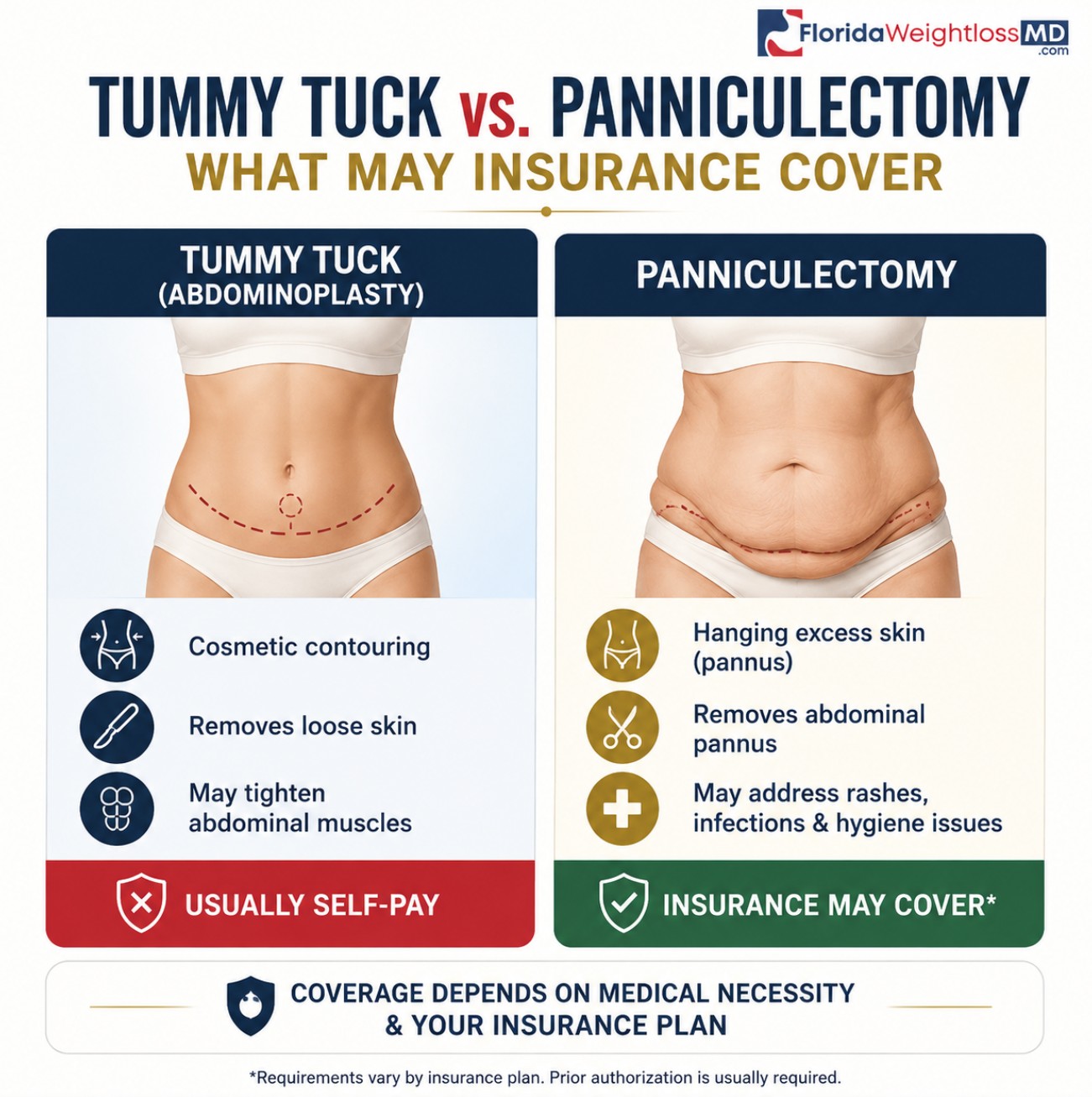
Tummy tuck is generally cosmetic and self-pay, while panniculectomy may be covered when medically necessary and plan requirements are met.
Why Is a Tummy Tuck Usually Not Covered by Insurance?
Insurance focuses on medical necessity, while a tummy tuck is generally designed around cosmetic abdominal contouring.
A traditional tummy tuck can remove loose skin, reshape the abdomen, and tighten lax abdominal muscles. Those goals may be important to a patient, but that does not automatically make the procedure medically necessary to an insurer.
This is why a patient may hear “insurance does not cover tummy tucks” even when loose skin is causing real problems. The next question is whether a different procedure—panniculectomy—better matches the medical problem.
See our upcoming guide: Panniculectomy vs. Tummy Tuck.
When Can Insurance Cover Excess Abdominal Skin Removal?
Panniculectomy may be considered when the hanging pannus is causing more than a cosmetic concern.
Insurance plans may look for evidence of a significant hanging abdominal fold together with documented medical or functional problems. Examples can include recurring rashes, skin infections, intertrigo, ulceration, moisture problems, difficulty with hygiene, discomfort, or interference with normal activity.
Plans may also request photographs, treatment records, weight history, weight stability, and prior authorization. Exact requirements vary by insurer and plan.
See our detailed Panniculectomy Insurance Requirements guide.
Does Insurance Cover Skin Tightening After Weight Loss?
It depends on what “skin tightening” actually means.
Patients use the phrase skin tightening for everything from nonsurgical treatments to major body-contouring surgery. Insurance evaluates the actual procedure being performed and whether that procedure is medically necessary under the plan.
Nonsurgical cosmetic skin tightening is different from surgically removing a large hanging pannus. If the problem is substantial excess skin after major weight loss, the more useful question may be whether the skin needs to be surgically removed.
What If the Loose Skin Is From Gastric Sleeve, Gastric Bypass or GLP-1 Weight Loss?
The cause of the weight loss matters less than the condition of the skin, your health, and whether your weight is stable.
Patients may develop loose abdominal skin after gastric sleeve, gastric bypass, revisional bariatric surgery, GLP-1 medications, medical weight loss, or major lifestyle-related weight loss.
Once weight is more stable, the question may shift from “How do I lose more weight?” to “What do I do about the skin that is left?”
For loose skin in several areas, see Post-Bariatric Surgery & Excess Skin Removal After Major Weight Loss.
How Do You Find Out Whether Insurance May Cover Your Surgery?
Identify the procedure first, then verify the plan’s requirements.
Start With a Surgical Evaluation
A surgeon determines whether your concern is best treated with panniculectomy, tummy tuck, another body-contouring procedure, or no surgery.
Verify Your Insurance Benefits
Acceptance of an insurance company does not automatically mean your individual policy covers panniculectomy.
Collect Medical Documentation
If you have recurring rashes, infections, skin breakdown, hygiene difficulty, or functional problems, accurate medical records can matter.
Prior Authorization When Required
The surgeon’s office may submit photographs and supporting documentation according to the insurer’s process.
Review the Decision & Your Options
If it is not covered, ask about self-pay, financing, or whether an appeal is appropriate.
Can You Combine an Insurance-Covered Panniculectomy With a Cosmetic Tummy Tuck?
Some patients need medically necessary skin removal but also want additional cosmetic contouring.
This is a surgeon-specific and plan-specific question. Insurance may only consider the medically necessary portion, while cosmetic muscle tightening or additional contouring may remain self-pay.
Do not assume approval for panniculectomy means every abdominal contouring step is covered. Ask for a clear breakdown of what is medically necessary, what is cosmetic, and what costs may remain your responsibility.
What Can Excess Skin Removal Results Look Like?
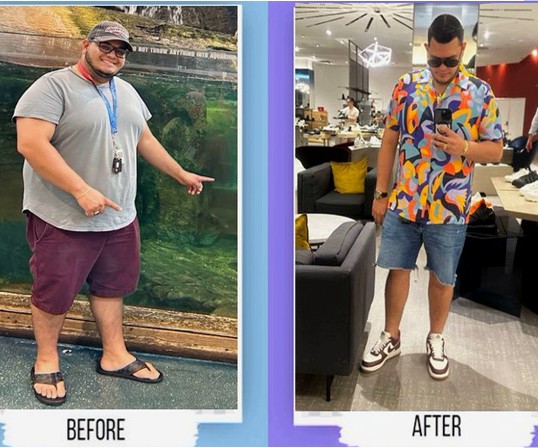
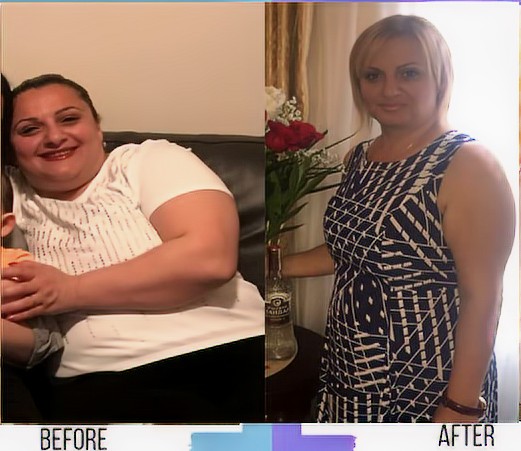
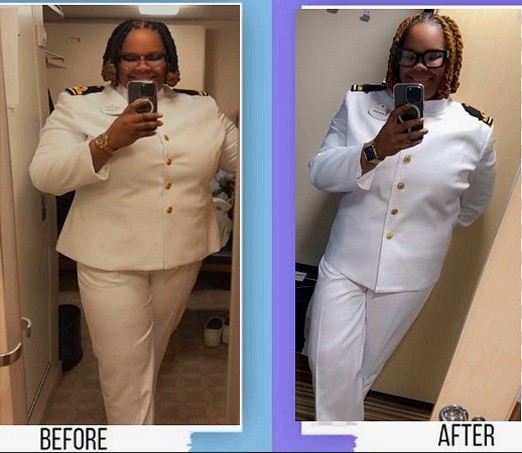
A real result can help patients understand what removal of the hanging pannus may accomplish.
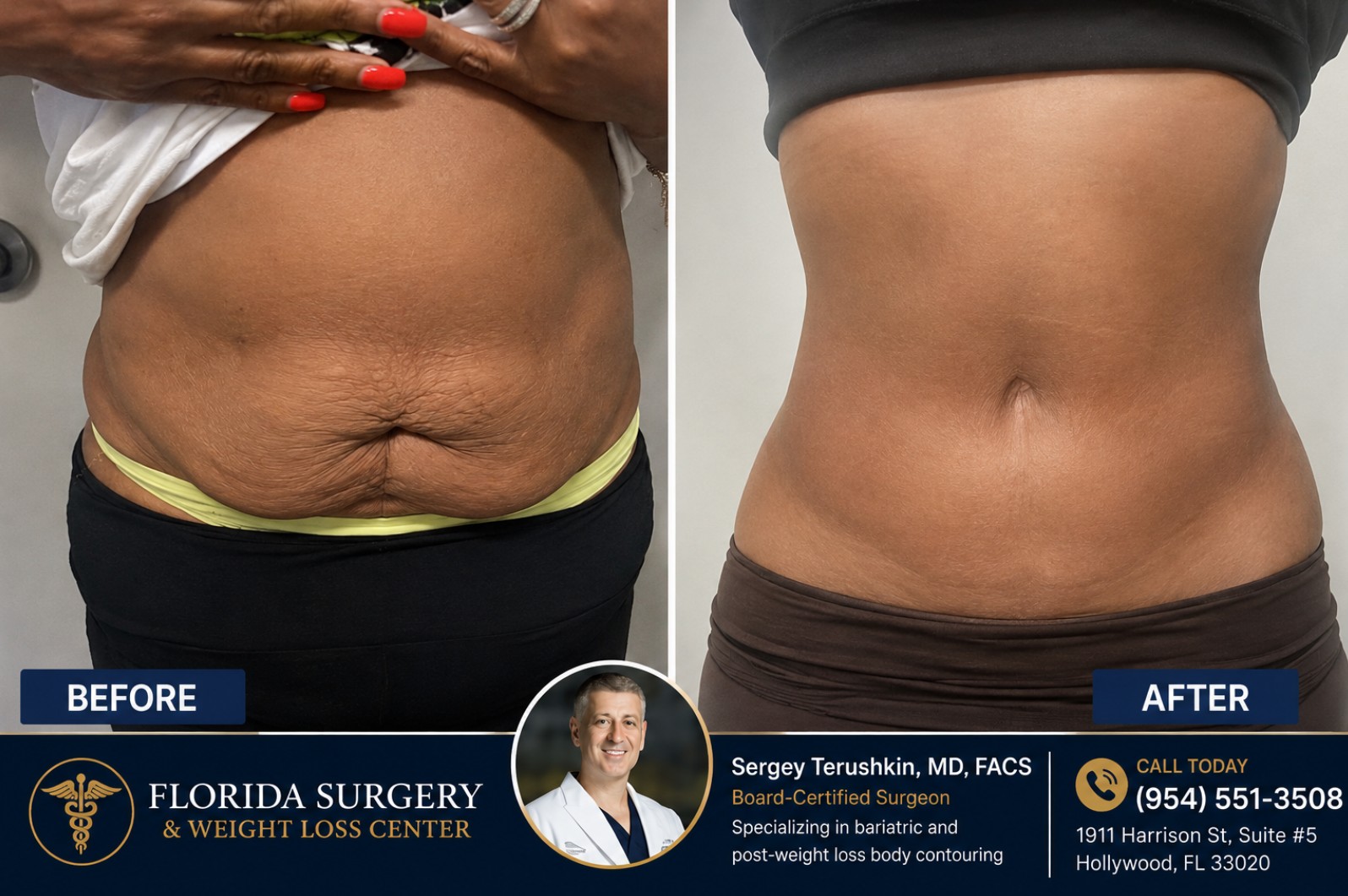
Real panniculectomy before-and-after result. Individual anatomy, scars, healing, and outcomes vary.
Before-and-after photos do not tell you whether insurance will cover surgery or whether panniculectomy is the right procedure for you.
See Panniculectomy Before & After Results for more about scars and healing.
How Long Is Recovery After Panniculectomy or Excess Skin Removal?
Recovery is gradual, and the final appearance takes longer than the first few weeks.
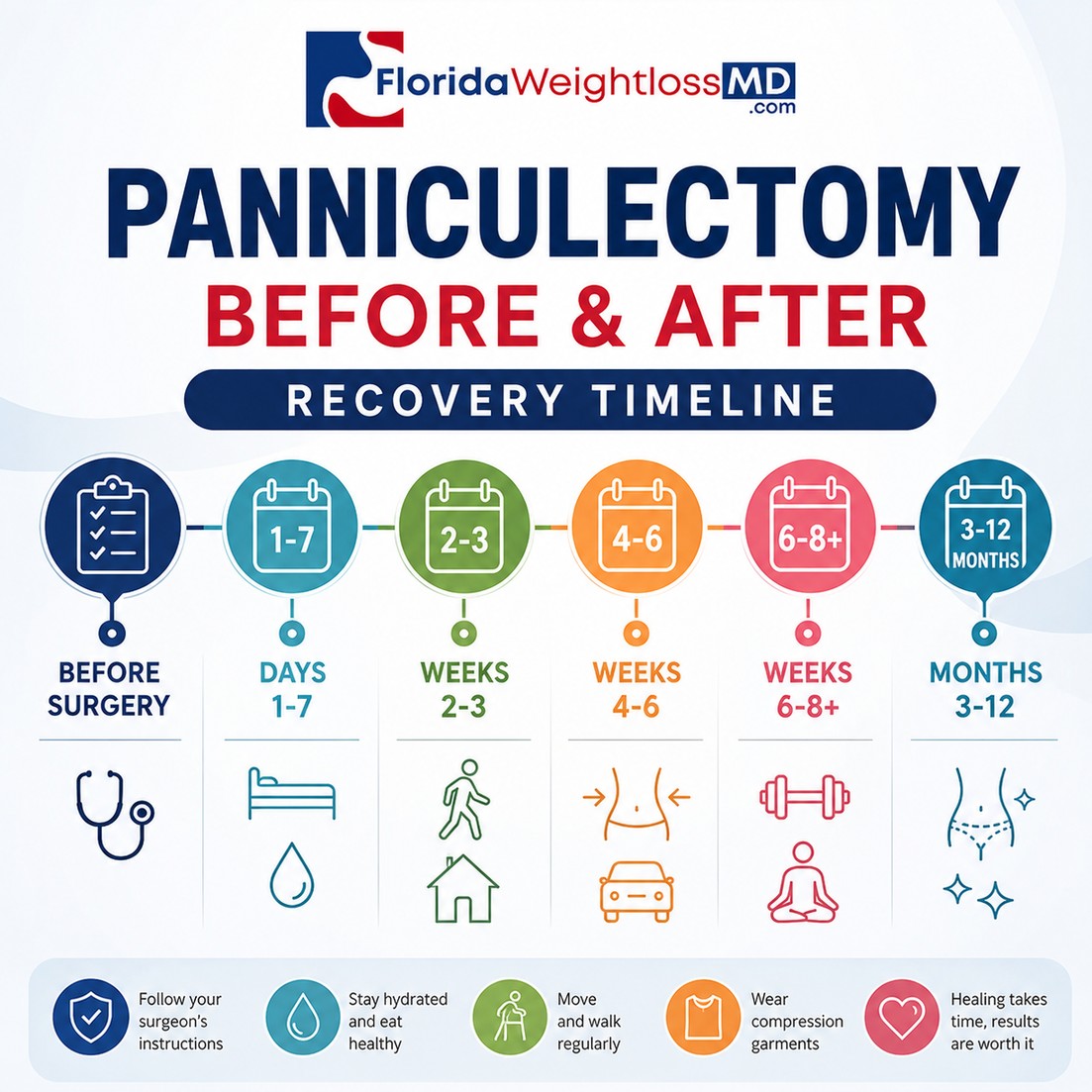
General panniculectomy recovery timeline. Individual healing and restrictions vary.
The first one to two weeks usually involve the most swelling, soreness, incision care, and activity restriction. Activity gradually increases, while swelling and scar maturation can continue for months.
Read the full Panniculectomy Recovery guide.
What Happens to the Scar Over Time?
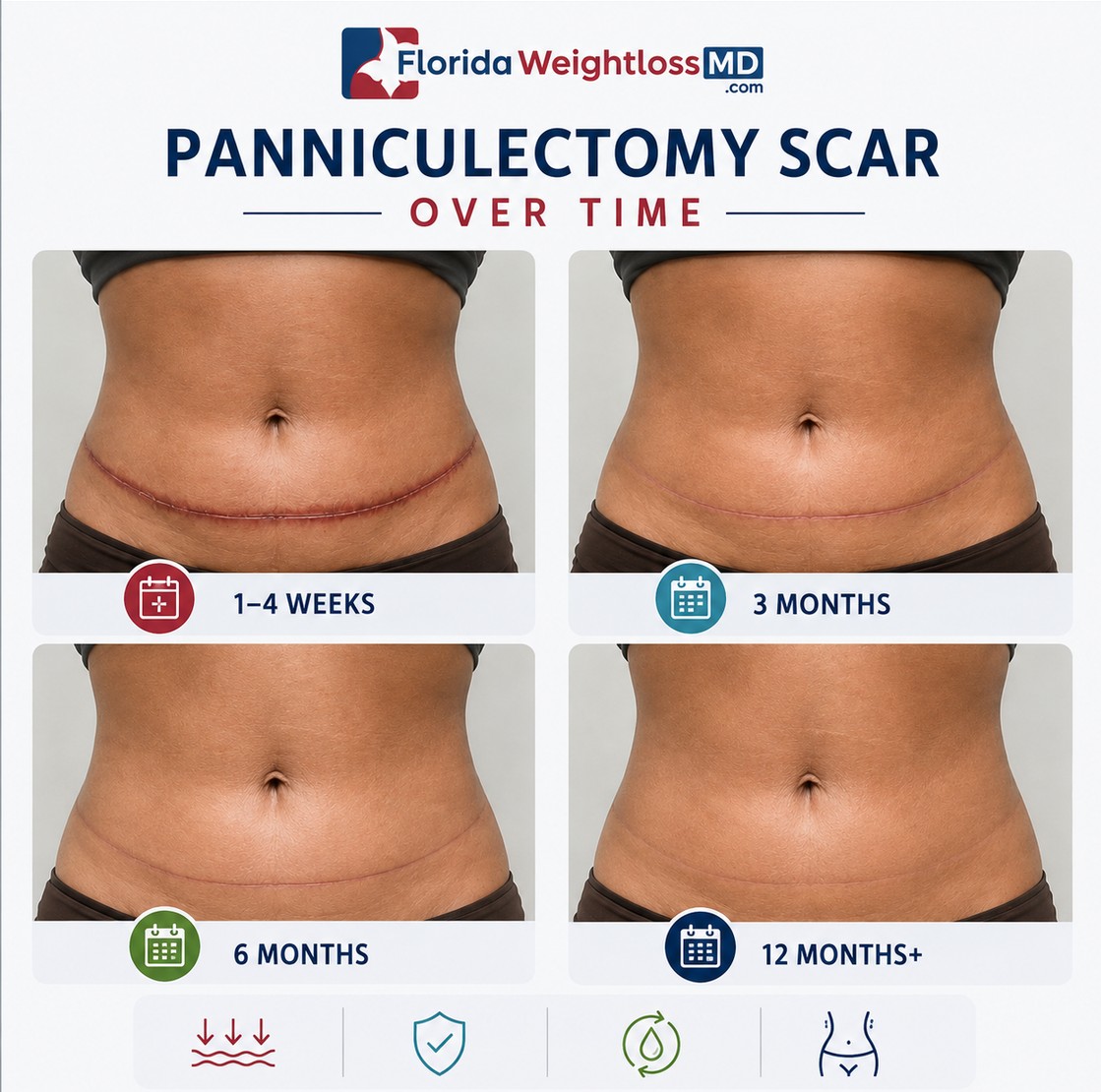
Illustrative scar-healing timeline. Scar appearance varies by patient.
Early scars can be darker, pinker, firmer, or more noticeable. Over time they often soften and fade, although they do not disappear completely.
Popular Questions About Tummy Tuck Insurance & Excess Skin Removal
Questions patients often ask before they know which procedure they need.
Can I tell insurance I need a tummy tuck because of rashes?
Insurance decisions are based on the actual procedure, symptoms, medical documentation, benefit plan, and medical-necessity criteria. A surgeon may determine that panniculectomy is the more appropriate medically necessary procedure.
Does insurance cover loose skin after weight loss?
Sometimes, but usually only when the procedure and circumstances satisfy the plan’s medical-necessity rules. Coverage is most commonly discussed in relation to panniculectomy rather than general cosmetic contouring.
Does insurance cover skin removal after gastric sleeve?
It can in some cases. Having gastric sleeve does not itself guarantee coverage. The plan may look at symptoms, photographs, treatment history, weight stability, and other requirements.
Can insurance cover excess skin removal after Ozempic, Wegovy or Zepbound weight loss?
The way weight was lost does not automatically determine coverage. If hanging skin remains and causes documented medical problems, a surgeon can evaluate whether panniculectomy may be appropriate.
What if my insurance will not cover the surgery?
Ask why it was denied and whether an appeal or additional documentation is appropriate. If it remains excluded or does not meet criteria, self-pay and financing may be alternatives.
Is skin tightening the same as panniculectomy?
No. Panniculectomy surgically removes hanging abdominal skin and tissue. “Skin tightening” is a broad phrase that can refer to very different cosmetic or surgical treatments.
Continue With Our Panniculectomy & Excess Skin Removal Guides
Not Sure Which Procedure Is Right for You?
Dr. Sergey Terushkin, MD, FACS evaluates patients with loose abdominal skin after major weight loss and can determine whether panniculectomy, tummy tuck, or another excess skin removal option may be appropriate.