What can change after panniculectomy? This page is focused on results—what abdominal excess skin removal can look like, how the abdomen changes during healing, how scars mature, and when patients may begin seeing a more settled result.
At Florida Surgery And Weight Loss Center, Dr. Sergey Terushkin, MD, FACS sees panniculectomy patients at our Hollywood, FL clinic from communities throughout South Florida.
Excess abdominal skin removal after significant weight loss at Florida Surgery And Weight Loss Center.
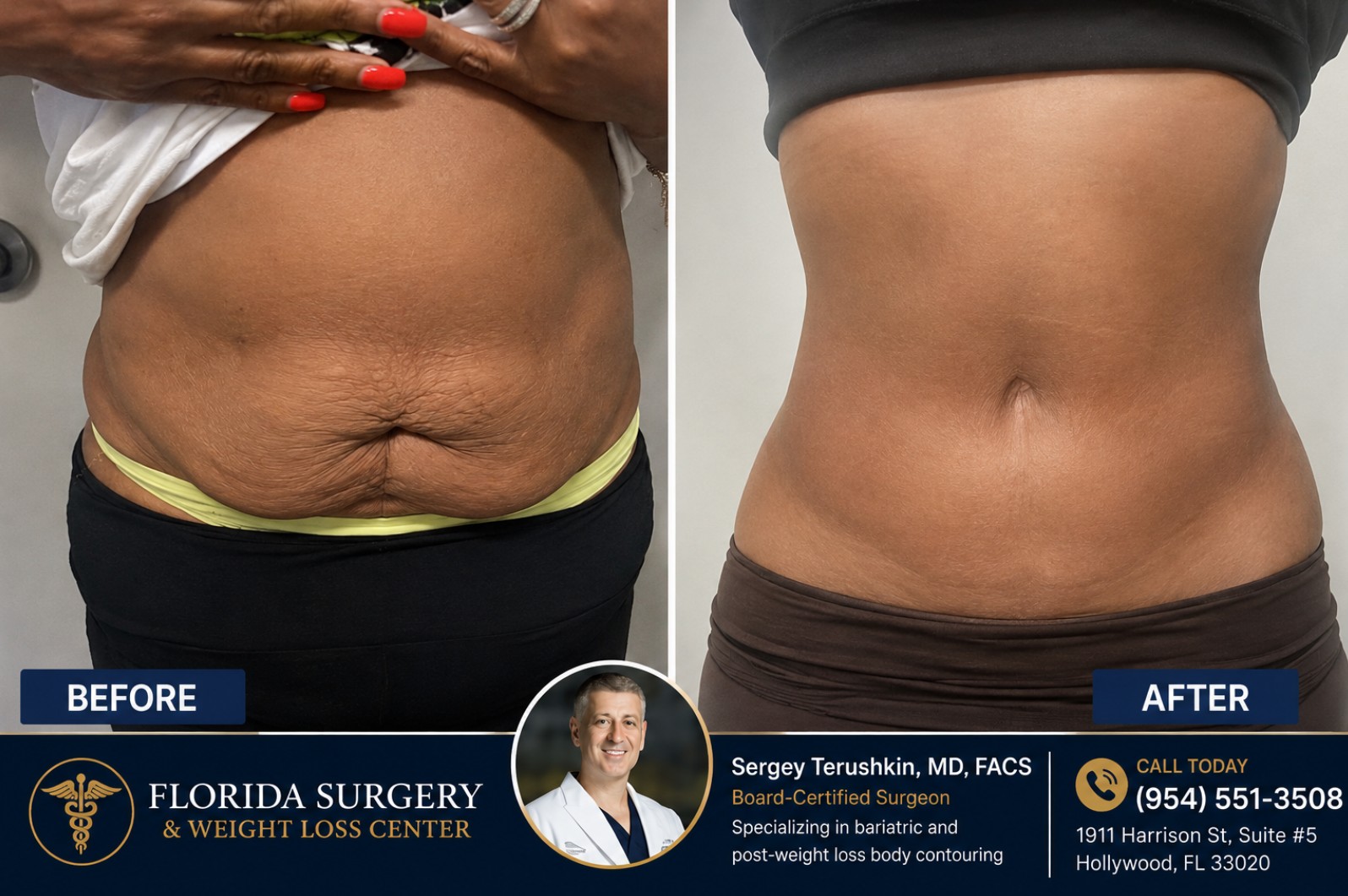
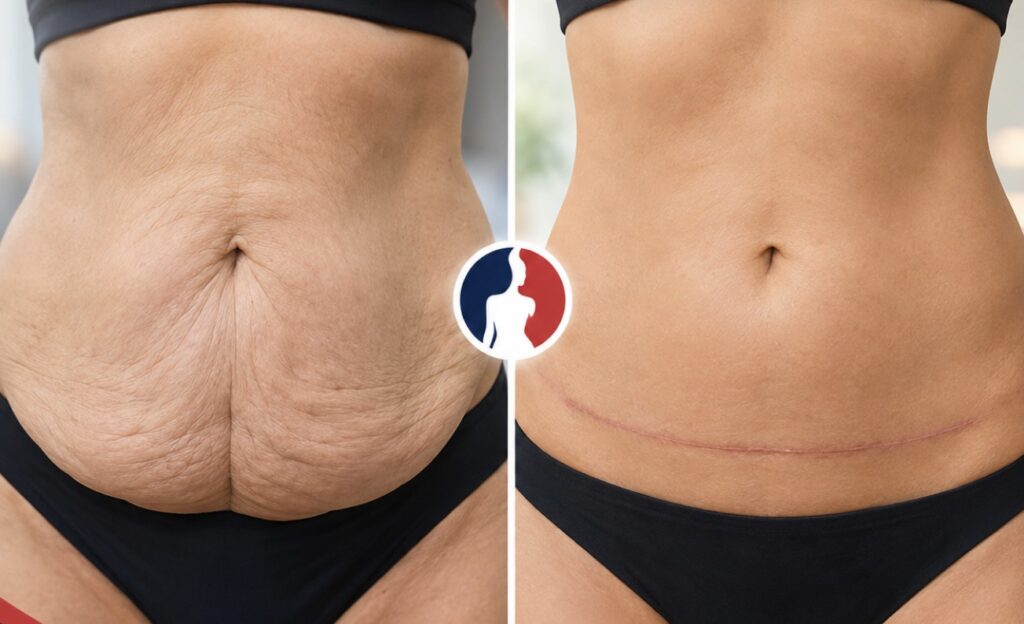
Panniculectomy before and after excess abdominal skin removal. Individual anatomy, scars, healing, and results vary.
The biggest visual change after panniculectomy is usually the removal of the heavy lower-abdominal fold. But a photograph does not show everything. Patients also ask about comfort, movement, skin irritation, clothing, hygiene, swelling, and what the scar looks like as it heals.
This is one result, not a promise of what every patient will look like. Dr. Terushkin evaluates the amount and location of excess skin, weight history, overall health, and the surgical plan before discussing what is realistic for an individual patient.
The operation is designed to remove the hanging lower-abdominal pannus—not to create an identical cosmetic result for every patient.
The lower abdominal fold is surgically removed, changing the amount of skin and tissue hanging over the lower abdomen.
Without the pannus, the lower abdomen can appear flatter and less bulky, although the exact contour depends on anatomy and surgical technique.
Patients may seek surgery because the fold rubs, traps moisture, interferes with clothing, exercise, or hygiene.
The incision needed to remove significant excess skin leaves a scar. Scar position, length, color, and maturation vary by patient.
A useful way to understand results is to separate the early postoperative change from the longer healing process.
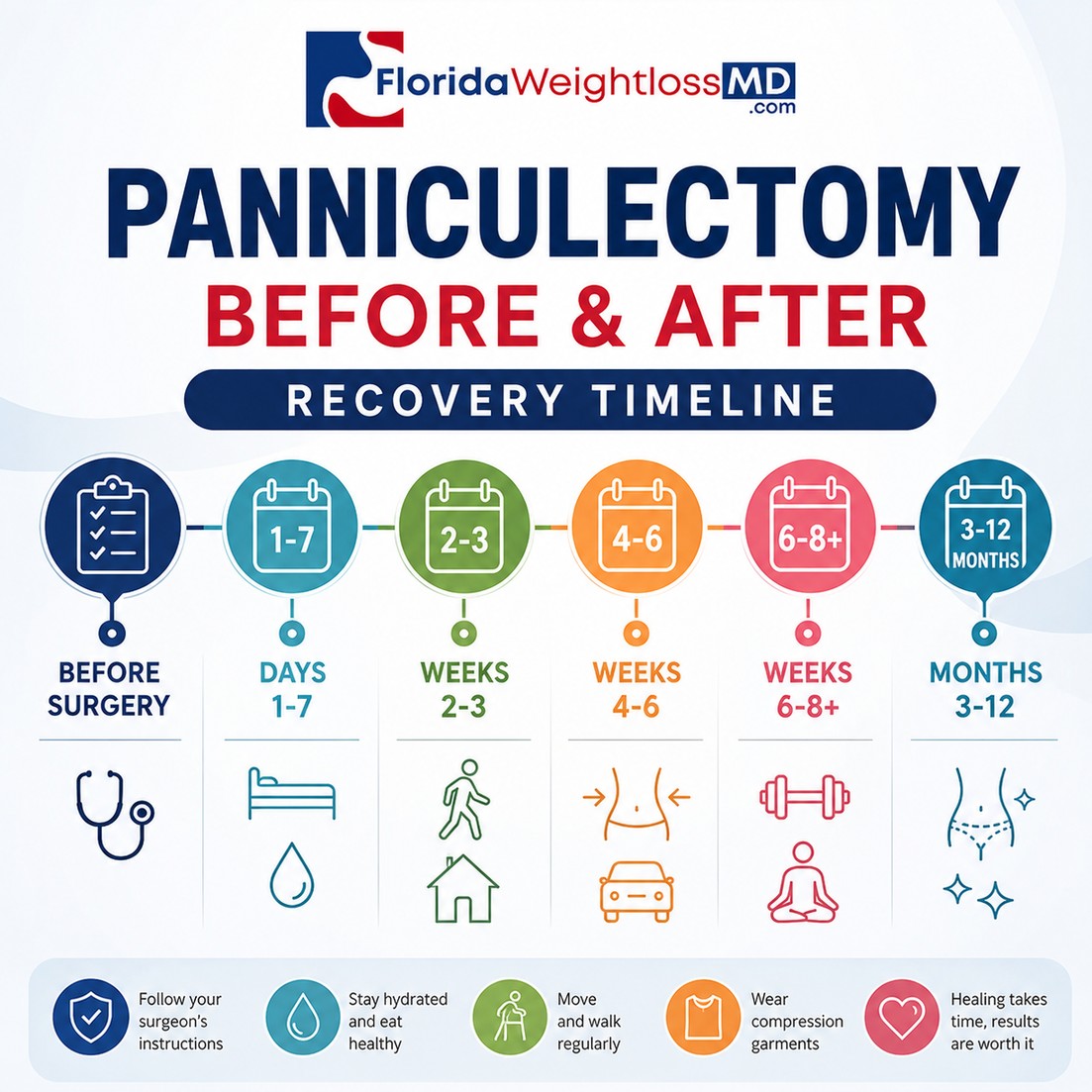
General panniculectomy and excess skin removal recovery timeline. Individual healing and return to activity vary.
Consultation, physical examination, photographs, weight and health review, medical clearance when needed, and insurance authorization if the procedure is being submitted for coverage.
Expect swelling, soreness, limited activity, and incision care. Drains may be used depending on the operation. The pannus has been removed, but this is far too early to judge the final contour.
Many patients gradually become more mobile and independent with routine activities. Swelling and tightness can still be noticeable, and return to work depends heavily on the type of job and individual recovery.
As swelling decreases, the abdominal shape becomes clearer. Patients should still follow lifting and exercise restrictions until cleared by their surgeon.
Many patients progress toward more normal activity after surgical clearance. Healing is individual, and more extensive excess skin removal can require a longer recovery.
The abdomen often looks more settled than it did during the first several weeks. The incision may still be visible and can continue changing in color and texture.
The contour is generally easier to evaluate after swelling has largely settled. Scars can continue softening and fading over time, although they do not disappear completely.
A photograph can show another patient’s result. A consultation is what allows Dr. Terushkin to evaluate your anatomy and explain what may be realistic for you.
Call Our Hollywood Clinic: (954) 551-3508The excess skin is removed during surgery, but the appearance of the abdomen continues changing as swelling decreases and tissues heal.
One of the easiest mistakes is comparing your abdomen at two or three weeks after surgery with someone else’s photograph taken many months later. Those are two very different stages of healing.
The removal of the hanging pannus can be apparent early, but early swelling is not the final result. The incision also changes over time. Ask when a postoperative photograph was taken before using it as a reference for your own expectations.
Removing a significant amount of lower-abdominal skin requires an incision, and that incision leaves a permanent scar.
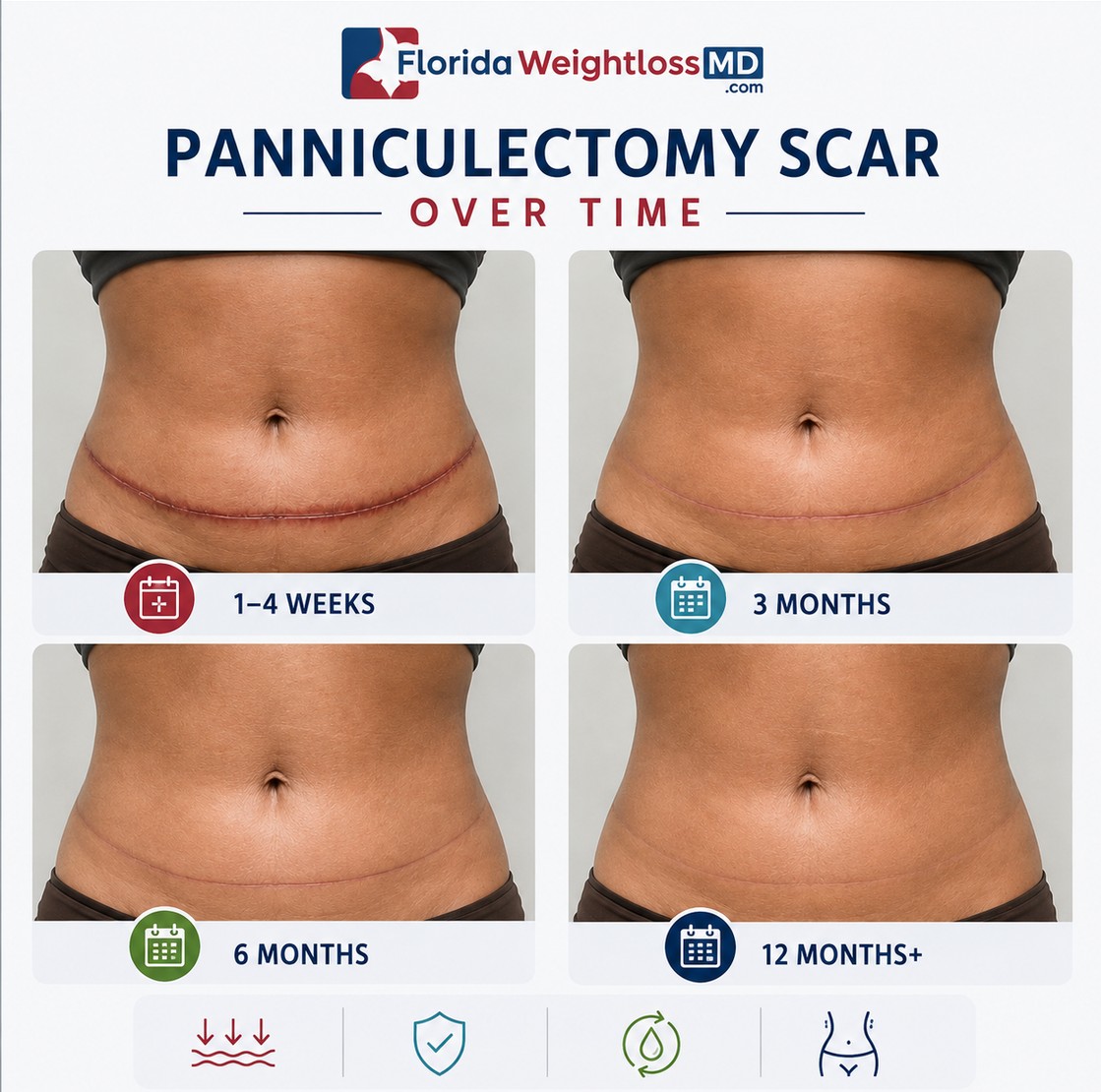
Illustrative panniculectomy scar-healing timeline after excess skin removal. Scar appearance and healing vary by patient.
Early scars can look darker, pinker, firmer, or more noticeable than they will later. Over the following months, scars often soften and change in color, but how much they fade varies from person to person.
The length and location of the incision depend on how much excess skin must be removed and the surgical approach. During your consultation, Dr. Terushkin can explain the expected scar pattern for your anatomy.
Patients seek excess skin removal after many different types of successful weight loss.
Some patients consider panniculectomy after bariatric surgery, gastric sleeve surgery, or gastric bypass. Others have lost significant weight through GLP-1 treatment, medical weight loss, diet and exercise, or a combination of approaches.
What matters before excess skin removal is not only how you lost the weight. Dr. Terushkin evaluates whether your weight is stable enough, your nutrition and health are appropriate for surgery, and the amount and location of loose skin can be addressed safely.
For a broader overview, read which procedure removes excess skin after weight loss and our page about post-bariatric surgery after major weight loss.
No. The procedures can involve the same area, but they have different goals.
Panniculectomy primarily removes the hanging pannus and may be performed for functional or medical reasons. A tummy tuck is generally a cosmetic operation that may include abdominal muscle tightening and additional contouring.
That means two patients starting with similar loose skin can end up with different contours depending on which operation they actually need. If your main concern is excess skin after weight loss, start with a surgical evaluation rather than choosing the procedure based on photographs alone.
Learn more about panniculectomy, insurance coverage, cost, and candidacy →
Florida Surgery And Weight Loss Center • Hollywood, FL
Dr. Sergey Terushkin, MD, FACS works with bariatric, post-weight-loss, and general surgery patients. That background is particularly relevant when a patient has lost substantial weight and is now dealing with the physical consequences of loose abdominal skin.
The consultation is not only about whether skin can be removed. It is also an opportunity to discuss the expected scar, recovery, medical risks, realistic contour, insurance requirements when applicable, and whether panniculectomy is actually the right procedure for you.
Florida Surgery And Weight Loss Center is located in Hollywood, FL, but Dr. Terushkin sees patients from throughout South Florida. Patients may travel to Hollywood for consultation, surgery planning, and postoperative follow-up.
Use these pages to understand the procedure—not just the photographs.
Practical answers to the things people usually want to know when looking at results.
Usually not right away. The hanging pannus is removed during surgery, but swelling and healing can significantly affect the early appearance. Many published “after” photographs are taken months after surgery, not during the first few weeks.
The amount varies widely. It depends on your anatomy, the size and location of the pannus, previous surgery, health, and the treatment plan. Dr. Terushkin can estimate what can reasonably and safely be removed after examining you.
Panniculectomy leaves a permanent surgical scar. It usually changes over time, but it does not disappear. Scar length and position depend on how much skin needs to be removed and the operation performed.
Yes, patients can be evaluated for excess skin removal regardless of whether major weight loss came from bariatric surgery, medication, or lifestyle changes. What matters is whether you are medically ready for surgery and whether your weight is appropriately stable.
Potentially, when panniculectomy is medically necessary and your insurance plan’s requirements are met. Coverage decisions depend on your specific policy, symptoms, documentation, authorization, and other criteria. Visit our main panniculectomy page for insurance information.
No. Many patients seek surgery because the hanging skin causes rubbing, moisture, rashes, hygiene difficulty, discomfort, or interference with exercise and clothing. Cosmetic improvement may occur, but panniculectomy is often considered for functional reasons.
No. The clinic is in Hollywood, Florida, and Dr. Terushkin sees patients who travel from Fort Lauderdale, Miami, Aventura, Pembroke Pines, Coral Springs, Boca Raton, Delray Beach, West Palm Beach, and other South Florida communities.
Call Florida Surgery And Weight Loss Center at (954) 551-3508 to schedule a consultation. Dr. Terushkin can examine your abdomen and discuss what type of excess skin removal may be appropriate.
Before-and-after photographs are useful, but your own anatomy is what determines your surgical options. Call Florida Surgery And Weight Loss Center in Hollywood, FL to schedule an evaluation with Dr. Sergey Terushkin and discuss your excess skin, expected result, recovery, insurance, or self-pay options.

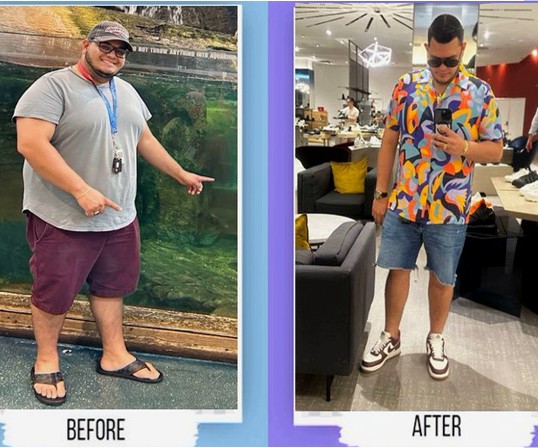
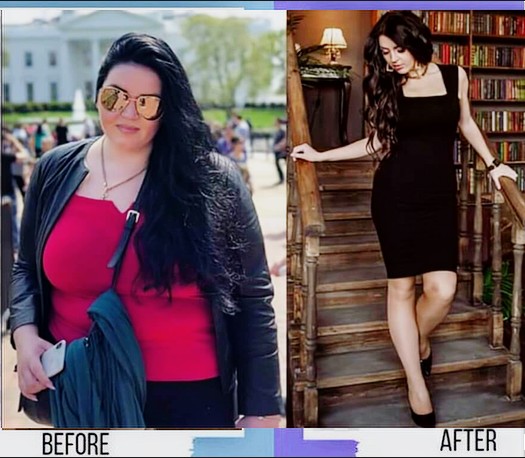
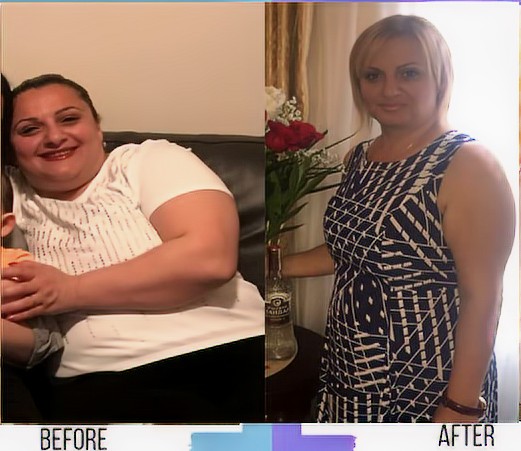
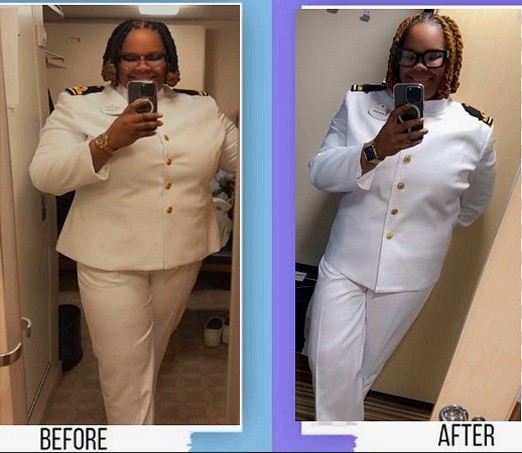
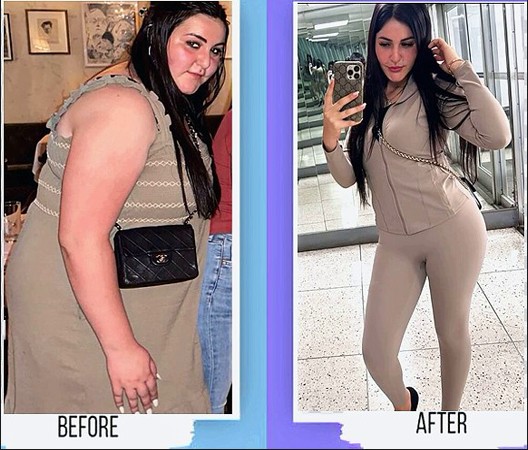
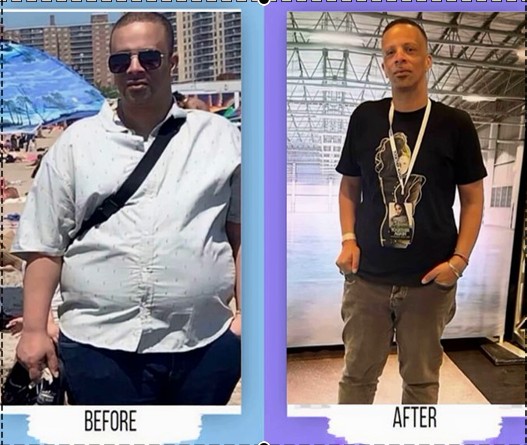
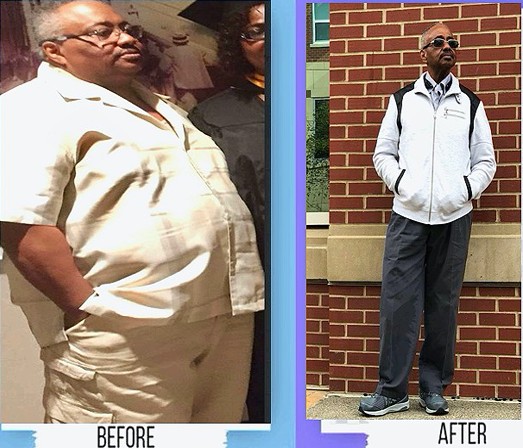
Real people, REAL RESULTS! Check out a few of the many people that we have helped reach their ideal weight goals over the years.
A World-Class Group Of Board Certified Providers Dedicated to You! With weight-loss surgery, you deserve a team of renowned experts at your back, guiding your transformation journey with your whole health in mind. And that’s exactly the kind of support you’ll find here.