Healthy BMI Starts at 18.5
A BMI below 18.5 is classified as underweight for most adult men.


Many men notice that losing weight becomes more difficult after age 35 or 40. Muscle mass gradually declines, testosterone levels may decrease, belly fat often increases, and metabolism slows. As a result, many men begin asking whether their BMI is still considered healthy—or whether it’s time to consider physician-guided weight loss.
Body Mass Index (BMI) remains one of the most widely used screening tools for evaluating weight status, but it does not tell the whole story. A muscular athlete and a sedentary man may have the same BMI while having very different body fat percentages and metabolic health.
This guide explains what a normal BMI for men is, how BMI changes with age, when belly fat becomes a concern, and when medical weight loss or bariatric surgery may be appropriate.
A healthy BMI for most adult men is between 18.5 and 24.9. These BMI categories remain the same whether a man is 25, 45, 60, or older. However, BMI should always be interpreted alongside waist circumference, muscle mass, body fat distribution, metabolic health, and overall medical history.
Before deciding whether you may benefit from lifestyle changes, GLP-1 medications, or bariatric surgery, it’s helpful to understand your current measurements. Our free calculators can help estimate your BMI, waist-to-hip ratio, and medication dosing.
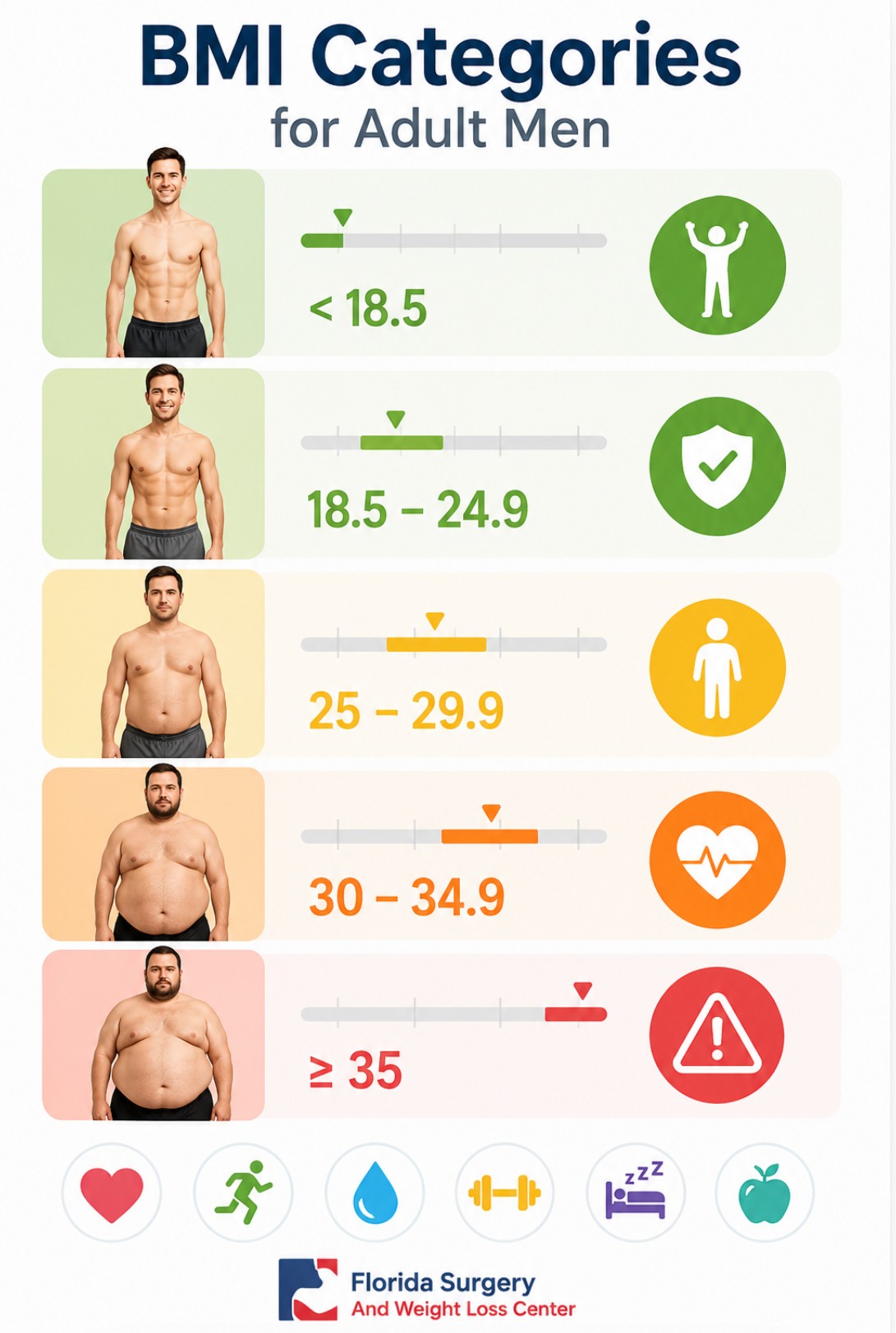
A BMI below 18.5 is classified as underweight for most adult men.
A BMI between 18.5 and 24.9 is the standard healthy-weight range.
Standard adult BMI categories remain the same throughout adulthood.
Waist size, muscle mass, body fat distribution, fitness, and metabolic health also matter.
Body Mass Index, usually shortened to BMI, compares a man’s weight with his height.
Healthcare professionals commonly use BMI as an initial screening measurement when assessing weight-related health risk. It provides a standardized way to classify adults as underweight, healthy weight, overweight, or having obesity.
BMI does not directly measure body fat. It also cannot distinguish between fat, muscle, bone, and water. This limitation is particularly important for muscular men, strength athletes, bodybuilders, and men with larger natural body frames.
Two men can have the same height, weight, and BMI while having very different waist measurements, muscle mass, body fat percentages, blood pressure, glucose levels, and cardiovascular fitness.
Use our BMI Calculator to estimate your current category.
These categories generally apply to adults age 20 and older. They are screening classifications and do not diagnose a disease or determine health by themselves.
| BMI Range | Weight Category | What It May Mean |
|---|---|---|
| Below 18.5 | Underweight | A medical evaluation may be appropriate, especially when low weight is unintentional or accompanied by weakness or muscle loss. |
| 18.5–24.9 | Healthy Weight | This is the standard healthy BMI range for most adult men. |
| 25.0–29.9 | Overweight | Waist size, body composition, blood pressure, glucose, cholesterol, and fitness help determine individual risk. |
| 30.0–34.9 | Class 1 Obesity | Weight-related health risks may be increased depending on the individual’s overall health and fat distribution. |
| 35.0–39.9 | Class 2 Obesity | A comprehensive evaluation may help determine whether medical weight loss or bariatric treatment should be considered. |
| 40.0 or Higher | Class 3 Obesity | This category is associated with a higher likelihood of significant weight-related health concerns. |
Important: Athletic muscle mass, a large body frame, fluid retention, aging-related muscle loss, and certain medical conditions can affect how BMI should be interpreted.
A BMI between 18.5 and 24.9 remains the standard healthy-weight range whether a man is 25, 45, 65, or older. What changes with age is body composition. Men may gradually lose muscle, gain visceral fat, become less active, or carry more weight around the abdomen even when BMI changes only slightly.
The numerical categories remain consistent, but health priorities and the clinical context can change over time.
BMI can be a useful starting point, but strength training, athletic muscle, diet quality, alcohol intake, sleep, and activity level still matter.
Muscle development, work schedule, alcohol use, stress, sleep, nutrition, and physical activity can all influence weight.
Providers may review blood pressure, glucose, cholesterol, family history, waist measurement, and overall fitness.
Many men notice more abdominal fat, lower activity, slower recovery, reduced muscle mass, and greater difficulty maintaining their previous weight.
Declining activity, poor sleep, work stress, alcohol, medications, lower testosterone, and gradual muscle loss may affect weight management.
Waist circumference, blood sugar, cholesterol, blood pressure, sleep apnea symptoms, liver health, and muscle strength may become especially important.
BMI remains useful, but preserving muscle, strength, mobility, bone health, nutrition, and independence becomes increasingly important.
Older men may lose muscle while body weight stays stable. Frailty, reduced appetite, inactivity, and unintentional weight loss may also require evaluation.
Strength, balance, mobility, nutrition, medication use, chronic disease, and daily function may matter more than reaching a specific BMI number.
BMI can identify a general weight category, but it cannot show how much muscle a man has, where his body fat is stored, or whether he has an underlying metabolic condition.
BMI is widely used because it is quick, inexpensive, and easy to compare. However, a man’s health cannot be fully assessed from height and weight alone.
A muscular man may have a BMI in the overweight or obesity range even when his body fat percentage and metabolic health are favorable. Another man may have a BMI within the healthy range while carrying excess abdominal fat, having low muscle mass, or developing high blood sugar, fatty liver disease, or elevated cholesterol.
It cannot distinguish fat tissue from muscle, bone, water, or other lean tissue.
Visceral fat around the abdomen may create greater health concerns than fat stored elsewhere.
Strength, cardiovascular fitness, endurance, mobility, and activity level are not reflected in BMI.
Blood pressure, glucose, cholesterol, liver health, sleep apnea, and medical history require separate evaluation.
Height and weight may be identical while muscle mass, abdominal fat, strength, and metabolic health are very different.
His BMI may appear elevated even though his body composition and metabolic health are favorable.
His BMI may be normal or only mildly elevated while abdominal fat and metabolic concerns are present.
Aging does not create a new BMI category, but it can change body composition and make weight management more difficult.
As men grow older, they may gradually lose lean muscle tissue, become less physically active, sleep less effectively, and accumulate more fat around the abdomen. Testosterone levels may also decline in some men, although weight gain itself, sleep apnea, medications, chronic illness, and inactivity can also influence hormone levels.
These changes may cause a man’s waist to increase even when his body weight or BMI changes only slightly. Clothing may fit differently, strength may decline, and metabolic health may worsen without a dramatic change on the scale.
Muscle mass may gradually decline with age, especially without regular resistance training and adequate protein intake.
Men commonly store excess fat around the waist, including visceral fat surrounding internal organs.
Sleep, stress, alcohol, medications, activity, nutrition, testosterone, and medical conditions can all affect weight.
Yes. A BMI within the healthy range does not guarantee a healthy body fat percentage or healthy fat distribution.
Some men have a BMI between 18.5 and 24.9 but still carry a relatively high amount of body fat, especially around the abdomen. This may be described as normal-weight obesity.
A man may also have low muscle mass, limited physical activity, insulin resistance, high triglycerides, fatty liver disease, high blood pressure, or sleep apnea despite having a BMI in the normal range.
Healthcare professionals may therefore evaluate several measurements and health signals rather than relying on BMI alone.
Neither measurement should be used alone. Together, they may provide a more useful picture of weight-related health risk.
Waist circumference provides information about abdominal fat that BMI cannot show. Men often accumulate visceral fat around the midsection, and this pattern may be associated with metabolic and cardiovascular concerns.
A waist circumference above approximately 40 inches may be associated with increased health risk for many adult men. Ethnicity, body frame, age, medical conditions, and the method used to measure the waist can affect interpretation.
Waist circumference and waist-to-hip ratio should be used as screening measurements rather than stand-alone diagnoses.
Use the Waist-to-Hip Ratio Calculator
A BMI outside the healthy range does not automatically mean a man needs medication or surgery. BMI should be considered together with waist size, body composition, metabolic health, symptoms, previous weight loss attempts, and personal goals.
Some men may improve their health through nutrition, strength training, better sleep, increased activity, and reduced alcohol intake. Others may benefit from physician-guided treatment when excess weight contributes to medical problems or remains difficult to manage through lifestyle changes alone.
The purpose of a consultation is not simply to treat a number. It is to understand whether weight is affecting health and which approach, if any, may be medically appropriate.
BMI is only one reason to begin the conversation. Symptoms, health conditions, abdominal fat, and repeated difficulty maintaining weight loss may be equally important.
A higher BMI may justify a broader medical review, especially when it continues to increase over time.
Treatment may be considered when excess weight contributes to diagnosed or suspected medical conditions.
Repeated weight loss followed by regain may signal the need for a more structured long-term plan.
Muscle loss, sleep problems, lower activity, increasing belly fat, and metabolic changes may require a different strategy than earlier in life.
Treatment eligibility depends on BMI, medical history, weight-related conditions, previous treatment attempts, medication safety, personal goals, and provider evaluation.
A complete evaluation considers the patient as a whole rather than recommending treatment from a single number.
The clinician reviews current weight, BMI, waist measurement, medications, medical conditions, family history, sleep, activity, and previous treatment attempts.
Blood pressure, blood sugar, cholesterol, fatty liver disease, sleep apnea, joint symptoms, mobility, and cardiovascular risk may be reviewed.
Some men prefer lifestyle support or medication, while others want to explore gastric sleeve or revision surgery after previous bariatric treatment.
Sustainable care may include nutrition, strength training, physical activity, medical follow-up, medication when appropriate, or surgery for eligible patients.
The right treatment depends on the individual patient. This chart provides a general comparison and should not be used to select treatment without medical evaluation.
| Feature | Lifestyle Care | Tirzepatide / GLP-1 Care | Gastric Sleeve | Revisional Surgery |
|---|---|---|---|---|
| Treatment type | Nutrition, activity, sleep, behavior change, and follow-up | Prescription medication with medical monitoring | Minimally invasive bariatric surgery | Surgical correction or conversion after a prior procedure |
| Medication required | No | Yes, while prescribed | Not inherently | Not inherently |
| Physical stomach change | No | No | Yes, part of the stomach is removed | Depends on the revision performed |
| Common candidates | Men seeking a non-medication starting point | Eligible men with obesity or overweight plus related conditions | Eligible patients needing greater and more durable weight loss | Patients with regain, complications, reflux, or inadequate prior results |
| Important considerations | Consistency, time, strength training, and long-term habits | Side effects, cost, coverage, adherence, and possible regain after stopping | Surgical risk, recovery, nutrition, supplements, and follow-up | Greater technical complexity and individualized risk |
| Long-term success depends on | Nutrition, activity, sleep, and consistency | Adherence, medical follow-up, nutrition, activity, and maintenance planning | Nutrition, follow-up, activity, supplements, and behavior change | Procedure selection, follow-up, nutrition, and long-term adherence |
Eligibility, risks, side effects, recovery, coverage, costs, and results vary. A treatment that is appropriate for one patient may not be appropriate for another.
These tools can help you prepare for a conversation with a healthcare professional, but they do not replace a medical evaluation.
Estimate your BMI using your height and weight and review the standard adult weight classifications.
Calculate Your BMICompare your waist and hip measurements to better understand abdominal fat distribution.
Calculate Waist-to-Hip RatioConvert prescribed medication doses into syringe units based on the concentration provided.
Open the Units CalculatorBMI can be useful, but muscle mass, waist size, visceral fat, age-related changes, and medical history provide important additional context.
This standard range applies to most adult men, but it should not be interpreted without additional health information.
The same adult categories apply in a man’s 20s, 40s, 60s, and later.
Muscle loss, lower activity, sleep changes, and increasing abdominal fat may alter risk even when BMI changes little.
A man may have a healthy-range BMI while carrying excess visceral fat or having low muscle mass.
Blood pressure, glucose, cholesterol, liver health, sleep apnea symptoms, and strength should also be reviewed.
Medication or bariatric surgery should never be selected from BMI alone.
Explore calculators, medication guides, and bariatric treatment pages from Florida Surgery & Weight Loss Center.
Calculate BMI from your height and weight and review standard adult weight categories.
Body Fat Distribution Waist-to-Hip Ratio CalculatorCompare waist and hip measurements to better understand abdominal fat distribution.
Medication Resource Tirzepatide & Semaglutide Units CalculatorConvert a prescribed medication dose into syringe units using the concentration provided.
Generic Medication Guide Tirzepatide Weight Loss in FloridaLearn about physician-guided tirzepatide treatment, eligibility, potential benefits, and follow-up.
Brand Medication Mounjaro® Weight LossReview Mounjaro®, tirzepatide treatment, medical eligibility, and weight management considerations.
Chronic Weight Management Zepbound® Weight LossLearn about Zepbound®, a tirzepatide medication prescribed for eligible adults with obesity or overweight.
Investigational Treatment Retatrutide Benefits, Risks and ResearchUnderstand what is known about investigational retatrutide and why unapproved online products may be risky.
Bariatric Surgery Gastric Sleeve SurgeryExplore eligibility, preparation, recovery, insurance, self-pay options, and long-term follow-up.
Previous Bariatric Procedure Revisional Bariatric SurgeryLearn about treatment after weight regain, reflux, complications, or inadequate results from previous surgery.

Dr. Sergey Terushkin provides medical and surgical weight loss care for eligible patients in South Florida. His approach considers BMI, waist size, body composition, metabolic health, prior treatment attempts, medical conditions, and individual goals.
Depending on the patient’s needs and eligibility, treatment may include lifestyle guidance, physician-supervised GLP-1 medication, gastric sleeve surgery, revisional bariatric surgery, or another personalized plan.
Meet Dr. Sergey TerushkinSchedule a consultation to review your BMI, waist measurement, medical history, weight-related concerns, previous treatment attempts, and long-term goals. Depending on your health and eligibility, options may include lifestyle support, tirzepatide, Mounjaro®, Zepbound®, gastric sleeve surgery, or revisional bariatric surgery.
These answers provide general educational information. A personalized medical evaluation is required to determine health risk or treatment eligibility.
A BMI from 18.5 through 24.9 is classified as a healthy weight for most adult men. BMI is a screening measurement and does not independently determine whether a man is healthy.
No. The standard adult BMI categories remain the same throughout adulthood. However, muscle mass, visceral fat, strength, activity level, hormone levels, and metabolic health may change with age, so BMI should be interpreted in context.
The standard healthy BMI range remains 18.5–24.9 for men over 40. Healthcare professionals may also pay closer attention to waist circumference, blood pressure, glucose, cholesterol, fatty liver disease, sleep apnea symptoms, and muscle mass.
A BMI of 18.5–24.9 remains the standard healthy range for men over 50. However, increasing belly fat, declining muscle mass, reduced activity, poor sleep, medications, and metabolic conditions may be more important than the BMI number alone.
The standard healthy adult range remains 18.5–24.9. For men over 60, strength, mobility, muscle mass, nutrition, bone health, chronic disease, and unintentional weight loss may become especially important.
Yes. BMI cannot distinguish muscle from body fat. Men with substantial muscle mass may have a BMI in the overweight or obesity range even when their body fat percentage, waist size, blood pressure, and metabolic health are favorable.
Yes. A man may have a BMI within the healthy range while carrying excess visceral fat around the abdomen. Waist circumference, waist-to-hip ratio, blood glucose, cholesterol, liver health, and blood pressure can provide additional information.
Use our Waist-to-Hip Ratio Calculator to review abdominal fat distribution.
A waist circumference above approximately 40 inches may be associated with increased health risk for many adult men. Ethnicity, body frame, age, medical history, and measurement technique can affect interpretation.
Neither measurement provides a complete assessment by itself. BMI estimates weight relative to height, while waist circumference provides information about abdominal fat. Healthcare professionals may use both measurements together with laboratory results and medical history.
A BMI of 25 or higher falls within the overweight category, but it does not automatically mean treatment is necessary. Muscle mass, waist size, fitness, blood pressure, glucose, cholesterol, liver health, and weight-related symptoms should also be considered.
Some prescription weight management medications may be considered for eligible adults with a BMI of 30 or higher, or a BMI of 27 or higher when at least one weight-related medical condition is present. Requirements vary by medication, diagnosis, insurance plan, contraindications, and provider evaluation.
Learn more about physician-guided tirzepatide treatment , Mounjaro® , and Zepbound® .
No. BMI alone does not determine whether surgery is appropriate. Eligibility depends on BMI, weight-related conditions, prior treatment attempts, surgical risk, medical history, insurance criteria, and provider evaluation.
Eligible patients may explore gastric sleeve surgery as one possible treatment option.
Revisional bariatric surgery may be considered after significant weight regain, inadequate weight loss, severe reflux, swallowing problems, device complications, or another issue related to a previous bariatric procedure.
Learn more about revisional bariatric surgery .
No. Retatrutide remains an investigational medication and is not currently FDA-approved. Products marketed online as retatrutide may be unapproved, incorrectly labeled, contaminated, or supplied without appropriate medical oversight.
BMI is calculated by comparing weight with height. You can use the free Florida Surgery & Weight Loss Center BMI Calculator to estimate your BMI and review the standard adult categories.
No. The Tirzepatide and Semaglutide Units Calculator converts a dose into syringe units using the concentration entered. It does not prescribe a dose, determine eligibility, or replace instructions from a licensed medical provider.


Explore before-and-after transformations from patients who received bariatric surgery and physician-guided weight-loss care at Florida Surgery And Weight Loss Center. Every patient’s journey is unique, and individual results vary.
















Individual results vary. Photographs reflect the experiences of individual patients and do not guarantee similar outcomes.