MEDICAL WEIGHT LOSS
I thought I had discovered the future of weight loss. Like many people searching online, I came across websites advertising GLP-3 (Retatrutide) with impressive claims about purity, effectiveness, and rapid weight loss. The ordering process seemed simple, the price appeared attractive, and I believed I had found a smarter alternative to physician-supervised treatment.
Unfortunately, my experience turned out very differently than expected. I struggled with inconsistent results, constipation, dizziness, confusion about dosing, and uncertainty about exactly what I had purchased.
Everything changed after scheduling a consultation with the medical weight loss team at Florida Surgery & Weight Loss Center.
The following story is a fictional educational example inspired by situations commonly discussed during medical weight loss consultations. It does not describe a specific patient. Individual experiences, treatment plans, and outcomes vary.
My biggest regret wasn’t trying a newer weight loss medication.
My biggest regret was trying to manage everything myself.
I purchased a product advertised online as GLP-3 (Retatrutide) without fully understanding where it came from, how it should be dosed, or whether it was appropriate for my medical history. After struggling with constipation, dizziness, and disappointing results, I met with Dr. Sergey Terushkin and the medical weight loss team at Florida Surgery & Weight Loss Center. Together we developed a physician-supervised treatment plan that included proper follow-up, dose adjustments, nutrition guidance, and ongoing support.
Like many people struggling with weight loss, I wanted something that seemed newer and more effective than traditional medications.
Searching online introduced me to dozens of websites advertising GLP-3 (Retatrutide). Nearly every site promised impressive purity, significant weight loss, and easy ordering. Many described the product as “research grade” or highlighted laboratory testing, making it appear trustworthy.
At the time, I believed I was simply avoiding unnecessary office visits and saving money. Looking back, I realize I also skipped the most important part of treatment—a proper medical evaluation.
“One of the most common misconceptions is that ordering medication online replaces medical care. Successful weight loss depends not only on choosing the right medication, but also on choosing the right patient, the right dose, and providing regular follow-up.”
— Dr. Sergey Terushkin, MD, FACS

After my order arrived, I carefully followed the instructions that came with the product and watched several online videos explaining how to mix and inject GLP-3. At first, everything seemed straightforward.
Very quickly, however, I realized there were dozens of different dosing recommendations online. Some people measured doses in milligrams, others in insulin syringe units, while many discussed completely different mixing instructions.
Instead of feeling confident, I became increasingly unsure whether I was preparing and injecting the medication correctly.
The medication arrived as a lyophilized powder that required reconstitution before use. I quickly discovered that understanding milligrams, milliliters, bacteriostatic water, and insulin syringe units was much more complicated than I expected.
Every website seemed to explain the calculations differently. Some recommended one amount of bacteriostatic water, while others suggested something completely different.
Eventually I found myself wondering after nearly every injection:
“Did I inject the correct dose?”
Without physician supervision, I simply didn’t know.
Understanding medication concentration and syringe units can be confusing. These educational calculators may help explain the mathematics behind peptide dosing, although they should never replace medical advice from your prescribing provider.
Several weeks into treatment, I noticed that my appetite suppression varied from week to week. Some days I felt the medication was working, while other days it seemed to have very little effect.
At the same time, I developed constipation, occasional dizziness, and periods of fatigue. I wasn’t sure whether these symptoms were caused by dehydration, incorrect dosing, my eating habits, or something else entirely.
Unfortunately, I didn’t have a healthcare provider following my progress or helping me determine what needed to change.
Persistent constipation, dizziness, vomiting, dehydration, severe abdominal pain, or fainting should always be discussed with a qualified healthcare provider.
Rather than attempting to adjust medication doses based on internet advice, patients experiencing concerning symptoms should receive an appropriate medical evaluation.
“Many side effects can often be managed with proper dose escalation, hydration, nutrition counseling, and regular follow-up. Patients should never feel that they need to manage everything alone.”
— Janna Goldfeld, PA-C
The advertisements I had seen online made weight loss appear almost effortless.
My experience was very different.
My weight loss was inconsistent, my appetite suppression varied, and I constantly questioned whether the medication, my dosing, or my injection technique was responsible.
Looking back, I realized that I had invested far more time trying to educate myself online than I would have spent attending a proper medical consultation.
Eventually, I realized I had more questions than answers.
I wasn’t sure what medication I had actually received, whether my dose was appropriate, or why my results were inconsistent.
Instead of continuing to guess, I scheduled a consultation with Florida Surgery & Weight Loss Center.
That appointment completely changed how I viewed physician-supervised medical weight loss.

During my consultation at Florida Surgery & Weight Loss Center, Dr. Sergey Terushkin took time to review everything from the beginning—not just the medication, but my entire weight loss journey.
We discussed my previous weight loss attempts, current health, medications, eating habits, physical activity, symptoms, and exactly what I had purchased online.
The consultation wasn’t about criticizing my decision. Instead, it focused on understanding what had happened and identifying the safest path forward.
“Patients often believe they simply need a stronger medication. In reality, success usually comes from selecting the right treatment, using the correct dose, and having regular medical follow-up.”
— Dr. Sergey Terushkin, MD, FACS
Dr. Terushkin asked several questions that immediately made me realize how little I actually knew about the medication I had purchased.
My answer to most of those questions was the same.
“I honestly didn’t know.”
One of the biggest misconceptions I had was believing that every new weight loss medication worked in the same way.
Dr. Terushkin explained that products marketed online as GLP-3 (Retatrutide) are different from tirzepatide, the active medication used in Mounjaro® and Zepbound®.
Rather than trying to compare which medication was “stronger,” the discussion focused on selecting the safest treatment for my medical history, symptoms, and long-term weight loss goals.
After reviewing my case, we decided to transition to a physician-supervised tirzepatide treatment program with individualized dose escalation, scheduled follow-up appointments, and ongoing clinical monitoring.
Learn more about our physician-supervised Tirzepatide Weight Loss Program .
The biggest surprise wasn’t simply changing medications.
For the first time, I had a physician and medical weight loss team following my progress every step of the way.
Instead of trying to calculate doses myself, my treatment plan included gradual dose escalation, regular follow-up appointments, nutrition guidance, side-effect management, and personalized adjustments based on how my body responded.
My constipation gradually improved, the dizziness resolved, and I finally felt confident because I knew exactly what medication I was receiving and how it should be used.
Every patient’s results are different. Weight loss depends on many factors including medical history, starting weight, nutrition, physical activity, medication adherence, and regular follow-up care.
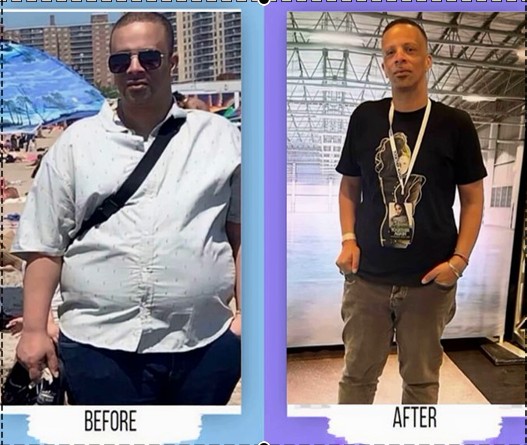
The before-and-after photos shown above represent actual patients treated through physician-supervised medical weight loss programs. Individual results vary and no outcome can be guaranteed.
Looking back, my biggest mistake wasn’t trying a newer medication.
My biggest mistake was believing I could manage everything myself.
I spent weeks trying to understand dosing charts, reading internet forums, and adjusting injections without knowing whether I was making the right decisions.
After beginning physician-supervised treatment, I realized the greatest value wasn’t simply receiving a prescription—it was having a medical team available whenever questions, side effects, or treatment adjustments were needed.
“The medication is only one part of successful weight loss. Education, follow-up, dose adjustments, nutrition, and accountability often make the greatest difference.”
— Dr. Sergey Terushkin, MD, FACS
Looking back, I wish I had started with a medical consultation instead of beginning with an online order.
A consultation would have helped me understand that retatrutide remains investigational, that products marketed as “GLP-3” may not come with patient-specific prescribing information, and that a dosing calculator cannot confirm what is actually inside an unverified vial.
I also wish I had understood how much support matters. Weight-loss treatment is not simply about receiving an injection. It involves selecting an appropriate medication, reviewing health conditions and medications, managing side effects, adjusting the dose, monitoring progress, and planning for long-term weight maintenance.
My biggest regret was not asking for professional guidance sooner.
“The goal is not to place every patient on the newest or highest-dose medication. The goal is to identify an appropriate treatment, introduce it carefully, and provide enough follow-up to make informed adjustments.”
— Dr. Sergey Terushkin, MD, FACS
These educational resources can help patients better understand retatrutide research, tirzepatide treatment, medication concentration, and syringe-unit calculations. Calculators are educational only and do not replace a prescription or personalized instructions.
Some patients may transition from a product marketed as GLP-3 or retatrutide to physician-supervised tirzepatide after a medical evaluation. The provider should consider what product was used, when the last injection was taken, the reported dose, current symptoms, medical history, and whether tirzepatide is appropriate.
A transition may be considered when medically appropriate because Mounjaro® and Zepbound® contain tirzepatide. However, they have different FDA-approved indications. Mounjaro® is associated with type 2 diabetes treatment, while Zepbound® has approved weight-management indications for eligible patients. A licensed provider should determine which option, if either, is appropriate.
Some patients may transition to physician-supervised semaglutide after an individualized evaluation. There is no universal retatrutide-to-semaglutide conversion. The starting plan depends on the previous product, reported dose, time since the last injection, side effects, medical history, and treatment goals.
There is no established consumer conversion formula that makes a dose of retatrutide directly equivalent to a dose of tirzepatide. They are different compounds with different receptor activity and studied dosing schedules. Patients should not estimate an equivalent dose independently.
Patients should not overlap an investigational retatrutide product with tirzepatide unless they are participating in an authorized clinical study with appropriate oversight. Combining or overlapping weight-loss injections may increase uncertainty and adverse-effect risk.
Possible explanations may include incorrect reconstitution, dosing errors, inconsistent administration, unrealistic expectations, storage problems, lifestyle factors, or uncertainty about the product’s identity and concentration. A clinician cannot determine the reason without reviewing the product information, dosing history, symptoms, and overall treatment plan.
Constipation has been reported with medications and investigational treatments that influence appetite and gastrointestinal function. It may also be affected by dehydration, reduced food intake, low fiber intake, other medications, or underlying health conditions. Persistent or painful constipation should be medically evaluated.
Dizziness may have several possible causes, including dehydration, inadequate calorie intake, low blood pressure, blood-sugar changes, dosing problems, medication effects, or an unrelated medical condition. Persistent, severe, or recurrent dizziness should be discussed with a healthcare provider.
The FDA states that retatrutide is not a component of an FDA-approved drug and cannot be used in compounding under federal law. Products advertised online as compounded retatrutide should not automatically be assumed to be equivalent to the investigational product studied in registered clinical trials.
There is no universal answer. Retatrutide remains investigational, while FDA-approved products containing tirzepatide and semaglutide are available for specific indications. The appropriate treatment depends on medical history, eligibility, side-effect tolerance, treatment goals, access, and provider evaluation.
PHYSICIAN-SUPERVISED MEDICAL WEIGHT LOSS
Schedule a medical weight-loss consultation with Florida Surgery & Weight Loss Center. Dr. Sergey Terushkin, MD, FACS, and Janna Goldfeld, PA-C, can review your previous treatment, symptoms, health history, and goals before discussing medically appropriate options.
Eligible patients may discuss physician-supervised tirzepatide, semaglutide, nutrition planning, gradual dose adjustments, side-effect management, and regular follow-up care.
(954) 551-3508
Telehealth Medical Weight Loss Available in 20+ Eligible U.S. States • Consultations Starting at $79
Schedule a ConsultationThis article is provided for educational purposes only and does not constitute medical advice, diagnosis, or a personal treatment recommendation. The patient story is a fictionalized educational example inspired by themes commonly discussed during medical weight-loss consultations. It does not describe a specific identifiable patient.
Retatrutide remains investigational and has not been approved by the FDA for routine prescribing. Patients should not purchase, inject, combine, stop, restart, or transition between weight-loss products without evaluation by a qualified healthcare provider.
Individual eligibility, treatment response, side effects, weight-loss results, and insurance coverage vary. Seek urgent medical care for severe abdominal pain, persistent vomiting, fainting, breathing difficulty, confusion, signs of severe dehydration, or another possible medical emergency.


Real people, REAL RESULTS! Check out a few of the many people that we have helped reach their ideal weight goals over the years.