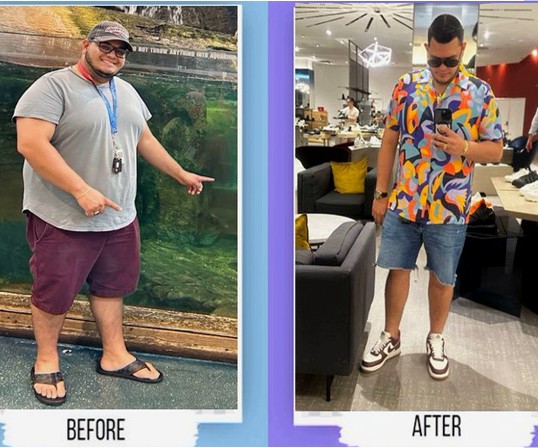
A panniculectomy can remove a heavy fold of lower-abdominal skin, but it also creates a permanent surgical scar. For most patients, the question is not whether there will be a scar, but where it will be, how it may change as it heals, and what can be done to care for it safely.
This guide from Sergey Terushkin, MD, FACS explains the scar in practical terms—from the first postoperative weeks through longer-term maturation—with real patient images from Florida Surgery & Weight Loss Center.
What Does a Panniculectomy Scar Look Like?
The incision is part of removing the hanging lower-abdominal pannus.
A panniculectomy usually requires a horizontal incision across the lower abdomen. The exact scar is different for every patient. Someone with a wider or heavier pannus may need a longer incision than someone with a smaller area of excess skin.
Prior abdominal surgery can also affect planning. Existing scars may sometimes influence where new incisions are placed or how the tissues are approached. During a consultation, the important discussion is not simply “How long will my scar be?” but what incision is necessary to safely remove the skin that is causing the problem.
Location
Typically across the lower abdomen, with the exact position based on anatomy and surgical planning.
Length
Varies with the width and amount of skin and tissue that must be removed.
Color
Early scars may be pink, red, darker, or more noticeable before gradually changing.
Texture
A new scar may initially feel firm or raised before it softens during maturation.
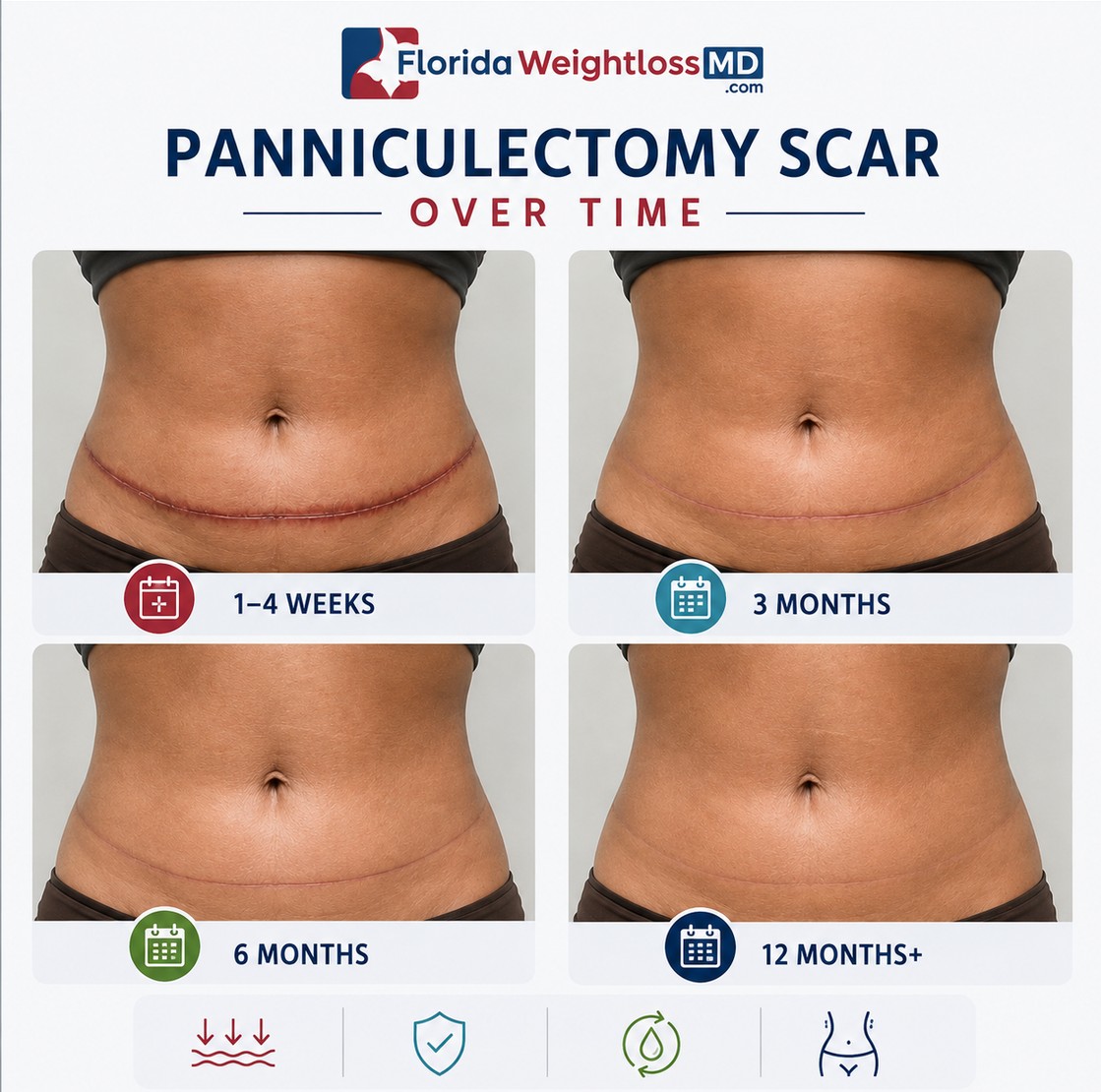
General educational scar-healing timeline. The appearance and speed of healing vary from patient to patient.
Panniculectomy Scar Healing Timeline: What May Change Over Time
Healing is gradual. A scar seen a few weeks after surgery should not be judged like a mature scar.
| Stage | What patients may notice | What matters most |
|---|---|---|
| First 1–2 weeks | Swelling, tenderness, dressings, and a fresh incision. Color can be more noticeable. | Protect the incision and follow your surgeon’s wound-care instructions. |
| Weeks 3–6 | The incision may be closed but still pink, red, darker, firm, itchy, or sensitive. | Do not judge the final scar or abdominal contour yet. |
| 2–3 months | Scar color and firmness can still be prominent while deeper tissues continue healing. | Ask your surgeon before starting massage, silicone products, or other scar treatments. |
| 3–6 months | Many scars begin to soften and change in color, although the pace is highly individual. | Continue follow-up and protect healed scars from excessive sun exposure. |
| 6–12 months | The scar may look flatter, softer, and less vivid as maturation continues. | Persistent thick, raised, painful, itchy, or widening scars can be discussed with your surgeon. |
| 12+ months | A more mature scar is easier to evaluate, but scars can continue changing beyond one year. | The final scar remains permanent even when it becomes less noticeable. |
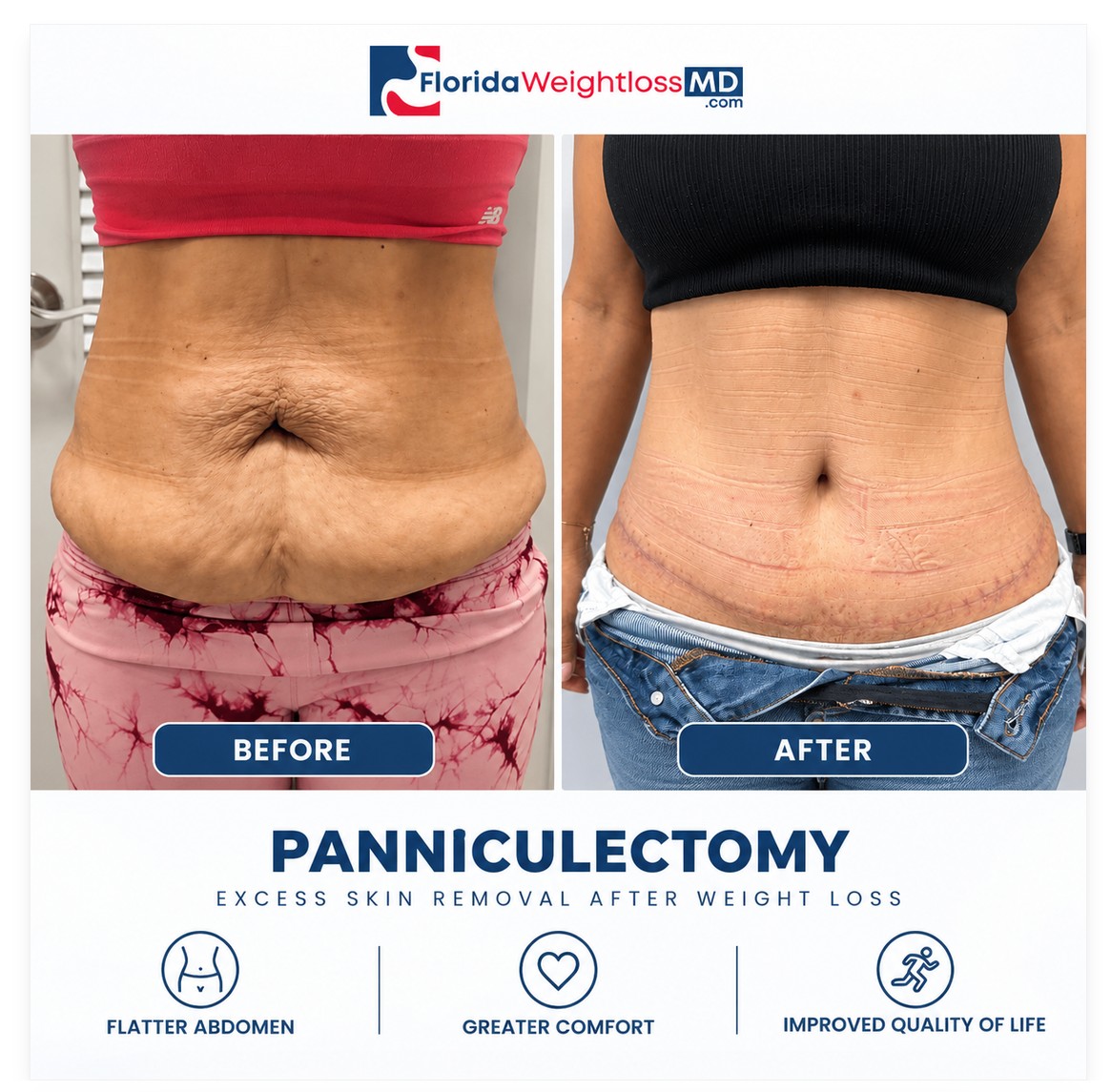
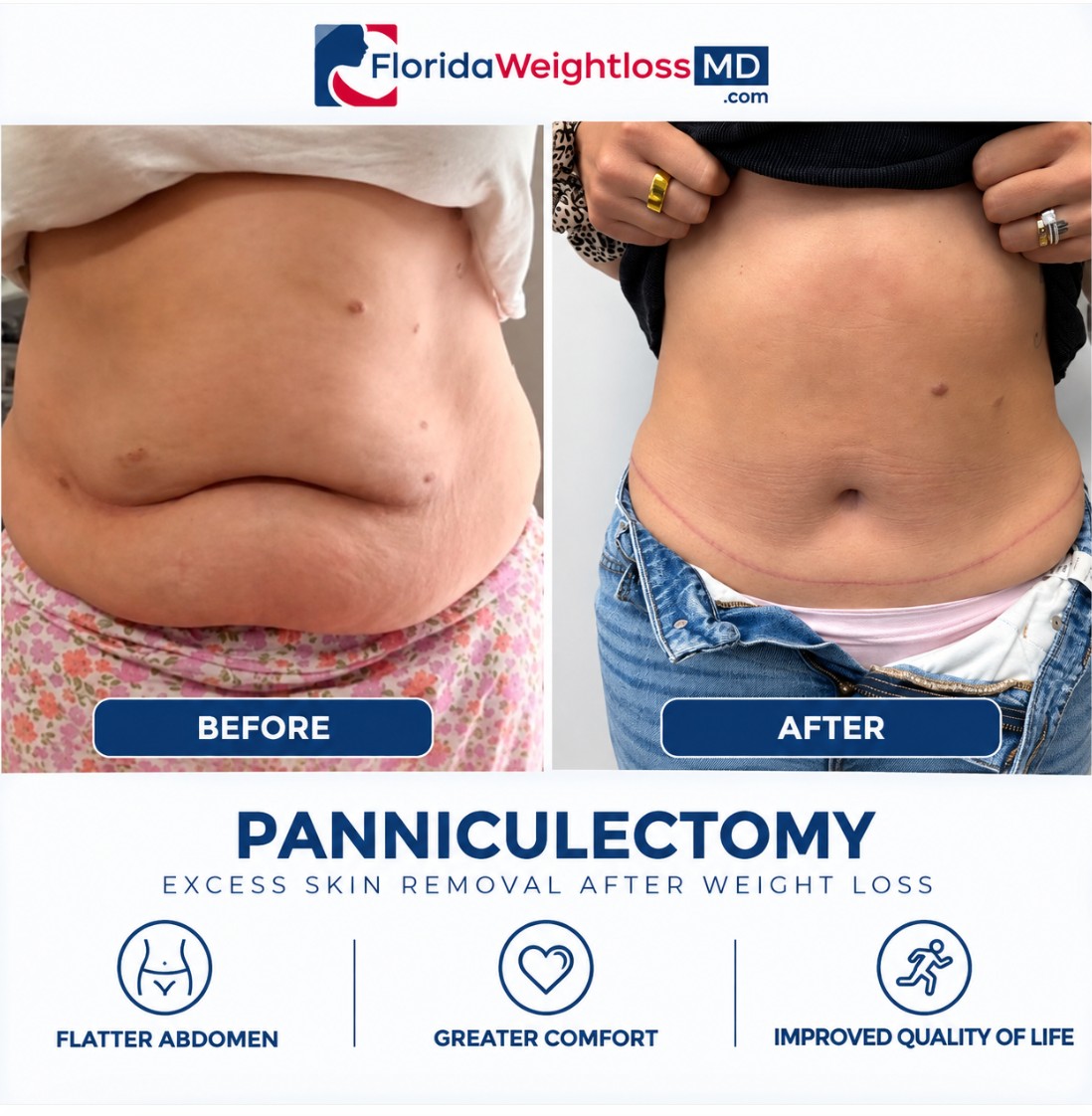
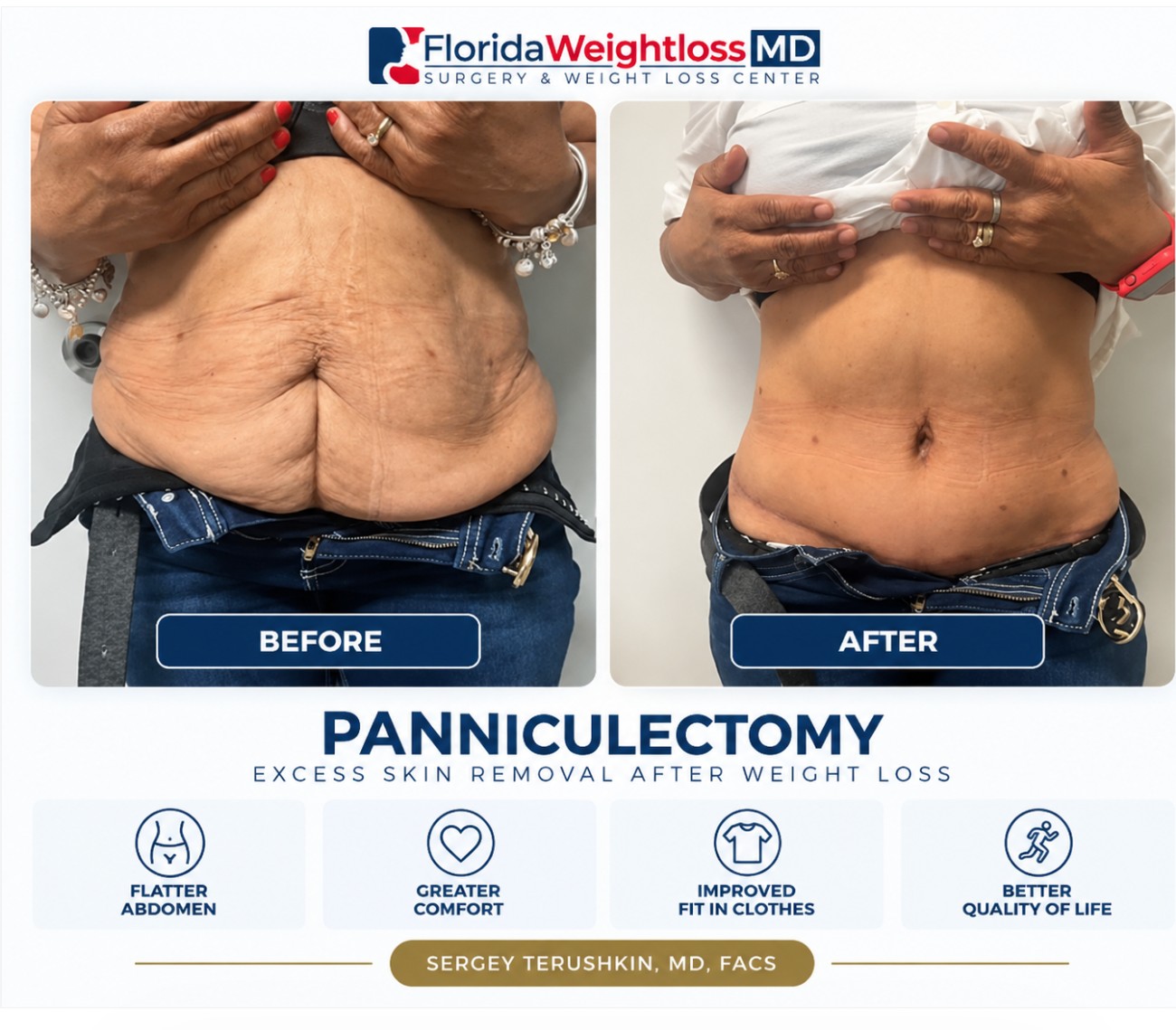
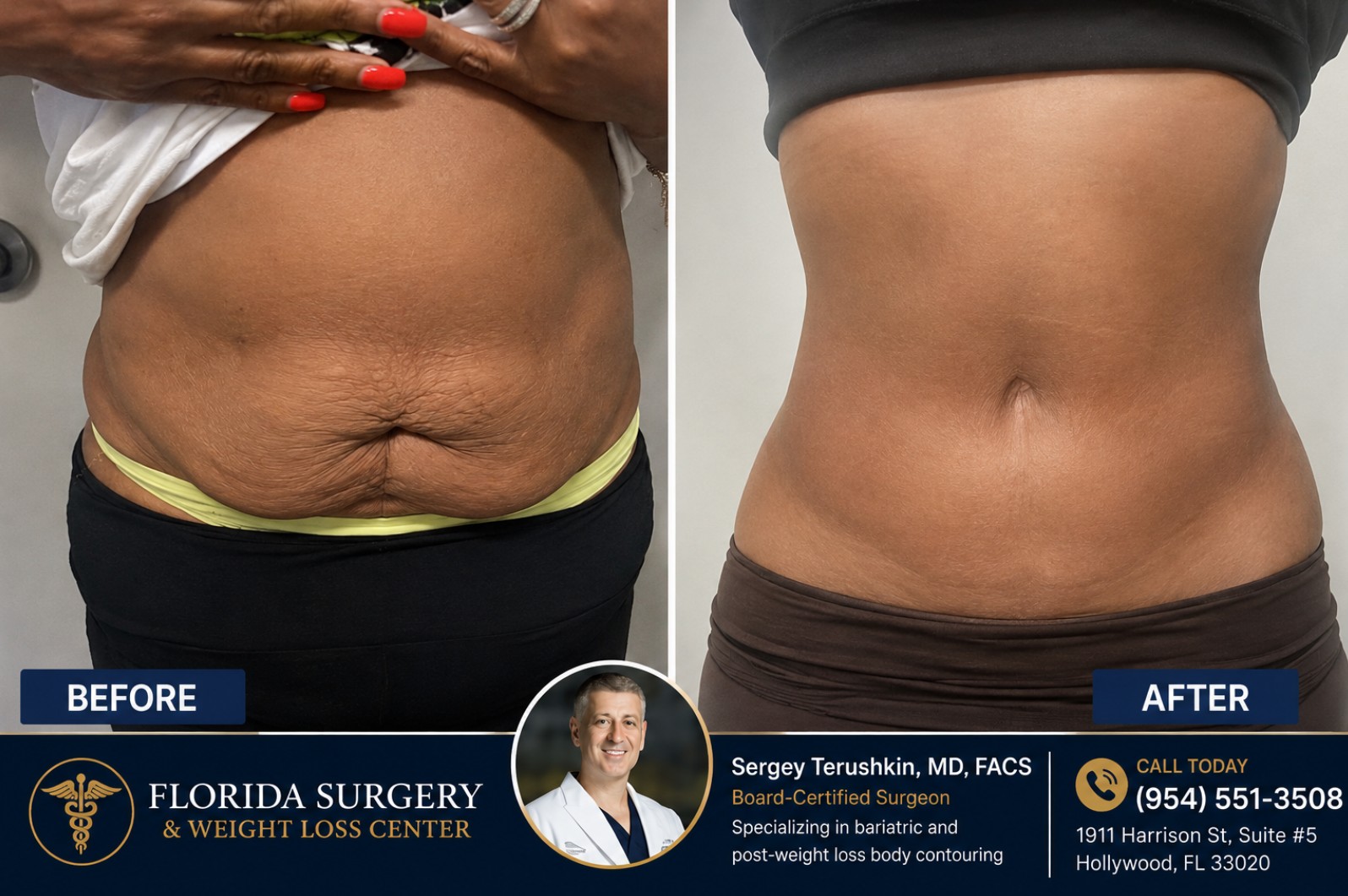
Real Panniculectomy Scars & Before-and-After Results
Real patients show how incision visibility and abdominal contour can differ.
Before-and-after images are useful because they show the tradeoff more realistically: the hanging skin is removed, but a surgical scar remains. These photographs should be used to understand possibilities—not to predict your exact result.
How Should You Care for a Panniculectomy Scar?
Scar care starts with safe wound healing—not with trying every product as soon as possible.
Your surgeon’s postoperative instructions take priority because the timing of wound closure, dressings, drains, activity, and topical products is different for each patient. Do not put creams, oils, silicone, or other products directly on an incision unless your surgical team says it is ready.
Protect the Incision
Keep follow-up appointments and follow instructions for dressings, bathing, activity, and wound care.
Ask Before Massage
Scar massage may be discussed after adequate healing, but the start date should come from your surgeon.
Discuss Silicone
Silicone gel or sheets are commonly discussed for healed scars, but they should be used only when the incision is ready.
Protect From Sun
Once healed and exposed, scar protection from UV light may help limit unwanted discoloration. Ask your care team what protection is appropriate.
Nutrition, medical conditions, smoking or nicotine exposure, medications, and wound complications can also affect healing. Tell your surgeon about changes in your health or medications during recovery.
Why Is My Panniculectomy Scar Dark, Red, Raised, or Firm?
A scar can look more noticeable before it looks more mature.
New scars often go through visible changes. Depending on skin tone and individual healing, a scar may temporarily appear pink, red, purple, brown, darker than the surrounding skin, or feel firm. Some scars become raised or thickened.
That does not mean every raised or dark scar is “normal,” and it is difficult to diagnose a scar from a photograph alone. If the scar is becoming progressively thicker, painful, intensely itchy, widening, or otherwise concerning, show it to your surgeon. Treatment options depend on what type of scar is actually developing and how far along healing is.
When Should You Call Your Surgeon About the Incision?
Do not wait for a routine appointment if something about the wound concerns you.
Contact your surgical team promptly for new or worsening incision concerns such as increasing redness, warmth, swelling, drainage, separation of the wound edges, worsening pain, or other changes your postoperative instructions tell you to report.
Panniculectomy Scar vs. Tummy Tuck Scar
The operations can involve the same region, but their goals and incision plans are not identical.
A panniculectomy focuses primarily on removing the hanging lower-abdominal pannus, often because of functional or medical problems. A tummy tuck (abdominoplasty) is generally performed for cosmetic contouring and may include abdominal muscle tightening and additional reshaping.
Because the amount of skin removed and the surgical goals differ, scar patterns can also differ. A photograph alone cannot tell you which operation you need.
Can a Panniculectomy Scar Be Hidden Under Clothing?
Often that is part of surgical planning, but it cannot be promised for every body or every incision.
Surgeons consider the patient’s anatomy, skin fold, previous scars, and the amount of tissue that must be removed when planning the incision. In many patients, the scar sits low on the abdomen and may be covered by some underwear or clothing, but exact placement varies.
If scar location is especially important to you, bring the type of clothing or swimwear you normally wear to the consultation and discuss your expectations before surgery.
Will a Panniculectomy Scar Ever Completely Disappear?
No surgical scar can be guaranteed to become invisible.
Scar maturation can make an incision look softer, flatter, and less noticeable over time, but panniculectomy leaves a permanent scar. The goal is not a scar-free abdomen; it is to balance the scar against the benefit of removing excess hanging skin and the problems that skin may be causing.
This is one reason realistic expectations matter. A patient bothered primarily by the idea of any visible scar may feel differently about surgery than someone dealing with a heavy pannus, repeated irritation, hygiene problems, or difficulty with movement and clothing.
Questions Patients Ask About Panniculectomy Scars
Short answers to common concerns before and after surgery.
How long does it take for a panniculectomy scar to fade?
The scar usually continues changing for many months. The American Society of Plastic Surgeons notes that a panniculectomy scar may take several months to a year to fade as much as it will, while longer scar maturation can continue beyond that. Individual healing varies.
Is the panniculectomy scar permanent?
Yes. The incision leaves a permanent scar, although its color, firmness, and visibility can change substantially as it matures.
Why does my scar look darker than my skin?
Healing scars can develop temporary or longer-lasting pigment changes, and the appearance differs across skin tones. Sun exposure can also make scars more noticeable. Ask your surgeon about appropriate protection once the wound is healed.
When can I start scar massage?
Do not use a generic date from the internet. Your incision must be sufficiently healed, and your surgeon should tell you when massage is appropriate for your specific wound.
Can I use silicone sheets or silicone gel?
Silicone products are commonly used for scar management, but they should not be placed on an open or incompletely healed incision. Ask your surgeon whether and when they are appropriate for you.
What if my scar becomes raised or thick?
Show it to your surgeon. Raised scars can have different causes and may require different management depending on the scar type, symptoms, and stage of healing.
Can panniculectomy remove an old C-section scar?
Sometimes a previous lower-abdominal scar can affect or be incorporated into surgical planning, but that depends on its location and the amount of tissue being removed. Your surgeon must examine the area to answer this for you.
When should I worry about redness around the incision?
Some color around a healing incision can occur, but increasing redness, warmth, drainage, wound opening, worsening pain, fever, or other concerning changes should be reported to your surgical team promptly.
Related Panniculectomy Guides
Continue with the part of the decision or recovery that matters to you.
Concerned About a Panniculectomy Scar or Considering Surgery?
Florida Surgery & Weight Loss Center provides panniculectomy and excess skin removal consultations with Dr. Sergey Terushkin, MD, FACS in Hollywood, Florida. Patients visit from Miami, Aventura, Hallandale Beach, Fort Lauderdale, Pembroke Pines, Boca Raton, Boynton Beach, West Palm Beach, and communities throughout South Florida.
Florida Surgery & Weight Loss Center
1911 Harrison St, Suite #5, Hollywood, FL 33020
Medical References
Patient education on this page is consistent with general guidance from the American Society of Plastic Surgeons on panniculectomy recovery and results, MedlinePlus information on panniculectomy, and Cleveland Clinic patient education on surgical scar care. Individual postoperative instructions from your surgeon should always take priority.
American Society of Plastic Surgeons — Panniculectomy Recovery
American Society of Plastic Surgeons — Panniculectomy Results
MedlinePlus — Panniculectomy
Cleveland Clinic — Scar Care