Author: Dr. Sergey Terushkin, MD, FACS
Florida Surgery & Weight Loss Center – Hollywood, FL
GLP-1 medications like semaglutide and tirzepatide are widely used for weight loss across Florida. Many patients receive compounded GLP-1 medications in vials and feel unsure about injecting at home. The process is straightforward once you understand the steps. These medications are injected under the skin in areas such as the stomach, thigh, or upper arm. Proper technique helps ensure the medication works as intended and reduces discomfort.
🟢GLP-1 medications (semaglutide and tirzepatide) are injected under the skin (subcutaneous), not into muscle
🟢 Compounded GLP-1 medications come in multi-dose vials and require a syringe for accurate dosing
🟢 Correct dosing is critical — using a GLP-1 dose-to-units calculator helps prevent common mistakes
🟢 The abdomen is the most commonly used injection site, but the thigh and upper arm are also safe options
🟢 Rotate injection sites weekly to reduce irritation and improve medication absorption
🟢 Always clean the injection site and remove air bubbles before injecting
🟢 Never use medication that has been exposed to heat, sunlight, or freezing temperatures (especially important in Florida)
🟢 Follow your healthcare provider’s instructions for dosing, storage, and injection technique
GLP-1 medications are injectable treatments used for weight loss and metabolic support. The most common options include semaglutide and tirzepatide.
Many patients in Florida use compounded GLP-1 medications, which are prepared in licensed pharmacies and provided in vial form for flexible dosing.
Before injecting compounded semaglutide or tirzepatide, it’s important to understand how your prescribed dose translates into units on an insulin syringe.
Dosing can vary depending on concentration, which is why many patients use a calculator to avoid mistakes.
👉 Use our:
GLP-1 (Tirzepatide / Semaglutide) Dose to Units Calculator
You may also want to read:
These resources explain how dosing progresses and what patients typically experience during treatment.
Explore our Medical Weight Loss Program

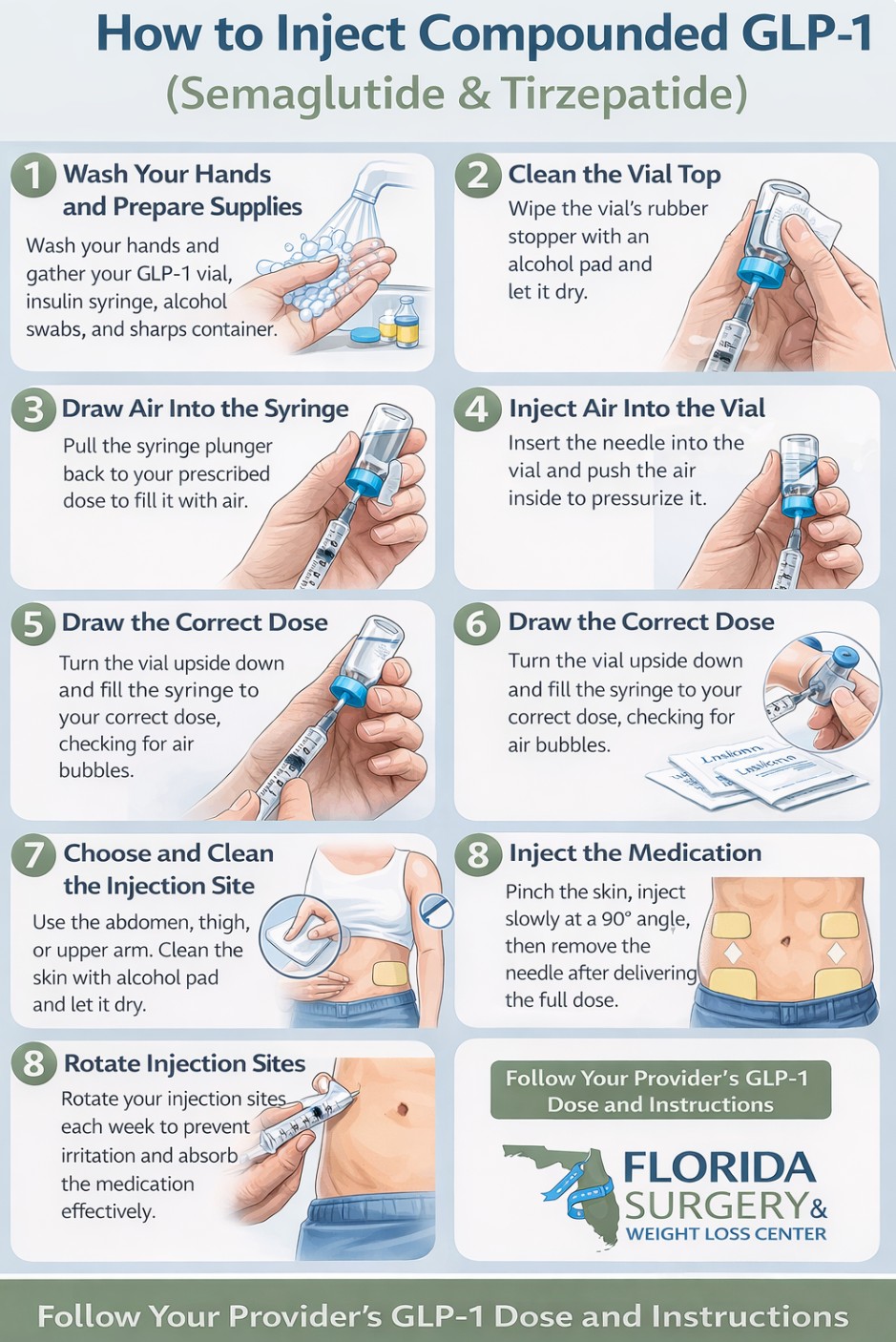
Wash your hands thoroughly. Gather your GLP-1 vial, insulin syringe, alcohol swabs, and sharps container.
Wipe the rubber stopper of the GLP-1 medication vial with an alcohol pad and allow it to dry.
Pull the syringe plunger back to your prescribed GLP-1 dose.
Push the air into the vial to help draw medication smoothly.
Turn the vial upside down and slowly pull the plunger to your prescribed dose.
Remove any air bubbles before injecting.
Use the abdomen, thigh, or upper arm. Clean the skin with alcohol and let it dry.
Insert the needle at a 90-degree angle and inject slowly.
Rotate sites weekly to reduce irritation and improve absorption.
GLP-1 medications such as semaglutide and tirzepatide are injected under the skin (subcutaneous), not into muscle.
The most common injection areas include the abdomen, thigh, and upper arm.
Abdomen (most commonly used):
Thigh:
Upper Arm:
👉 Rotate injection sites weekly to avoid irritation and improve absorption.

Florida heat can affect GLP-1 medication stability and injection safety.
If your medication was exposed to high temperatures, do not use it.
Prefilled pens like Ozempic®, Wegovy®, Mounjaro®, and Zepbound® are designed for convenience and require minimal preparation.
Compounded GLP-1 medications:
Patients using compounded medications should follow instructions carefully and use proper dosing tools.

Contact your provider if:
Compounded GLP-1 medications are not FDA-approved and are prepared by licensed pharmacies when appropriate. Treatment requires medical evaluation and prescription.
📍 1911 Harrison Street, Hollywood, FL
📞 (954) 551-3508
Physician-guided GLP-1 weight loss programs available across Florida via telehealth and in-office visits.
About Dr. Terushkin
Dr. Sergey Terushkin, MD, FACS, is a board-certified surgeon and weight loss specialist at Florida Surgery & Weight Loss Center in Hollywood, FL. He provides physician-guided GLP-1 treatments, bariatric care, and personalized weight loss programs.
Medical References
Information in this article is supported by the following medical sources:
FDA Prescribing Information for Ozempic® (Semaglutide)
FDA Safety Guidance on GLP-1 Medications
Ozempic® Official Instructions for Use and Storage
Healthline: Does Ozempic Need to Be Refrigerated?
Medical News Today: Ozempic Storage and Refrigeration Guide


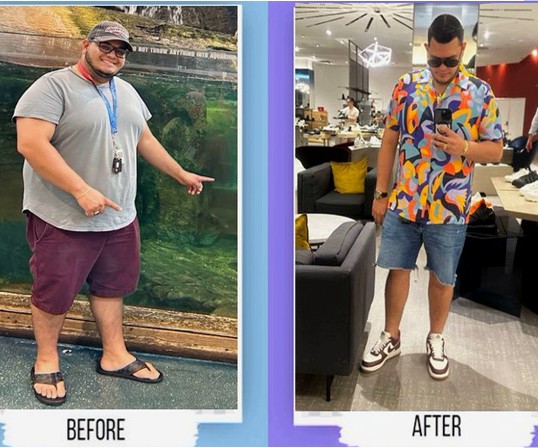
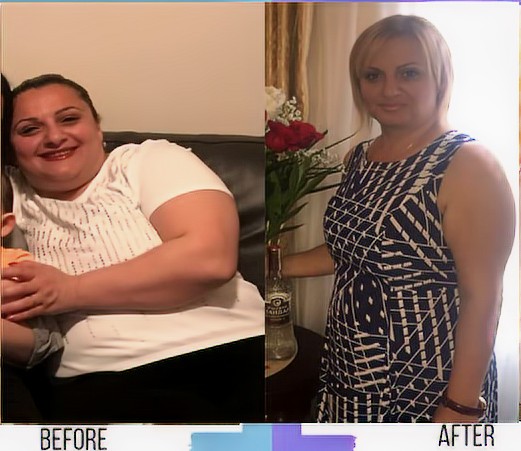
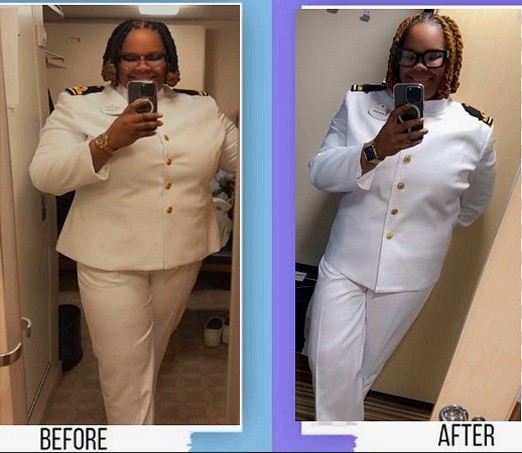
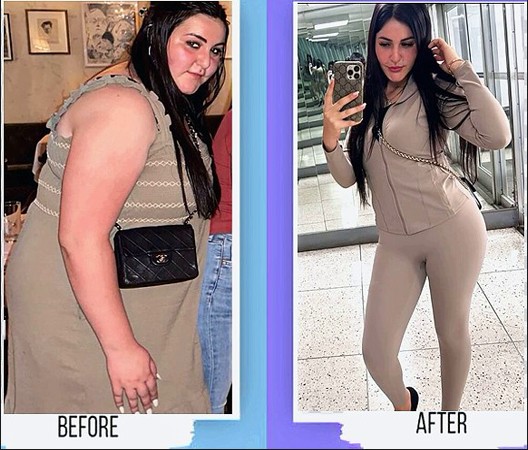
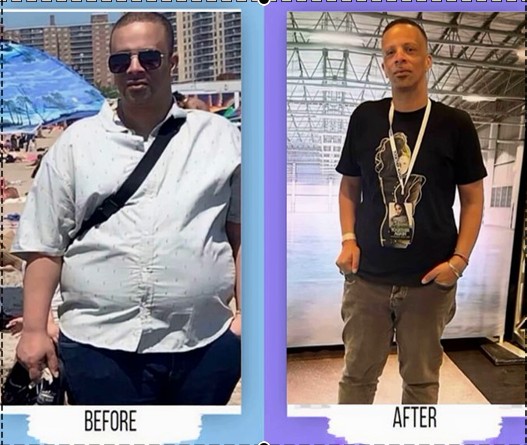
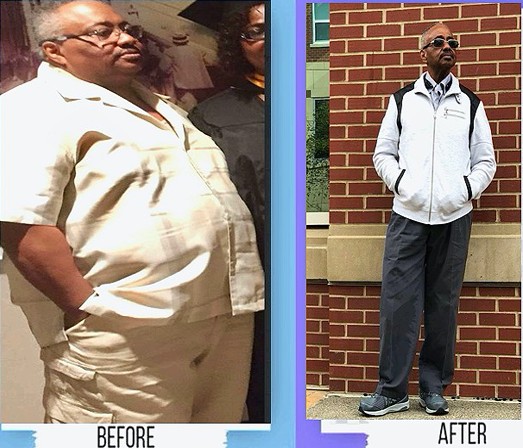
Real people, REAL RESULTS! Check out a few of the many people that we have helped reach their ideal weight goals over the years.