Loading

Steak & Weight Loss: The Best High-Protein Cuts for Bariatric Patients


Educational infographic illustrating high-protein steak choices for bariatric patients, highlighting lean and low-fat cuts such as top sirloin, eye of round, filet mignon, and flank steak to support weight loss and metabolic health.
01/23/2026

Authored by:
Sergey Terushkin, MD, FACS, FASMBS, DABOM, DABS-FPMBS

Key Takeaways

  • Protein Density: Not all beef is created equal. Lean cuts like Sirloin, Flank, and Top Round offer the highest protein-to-calorie ratio.
  • The Muscle Factor: High-quality protein is essential for preventing muscle loss while using medications like Semaglutide or after bariatric surgery.
  • Fat Matters: Fatty cuts (like Ribeye) can double your calorie intake and may cause digestive issues (dumping syndrome) for gastric bypass patients.
  • Cooking Method: Grilling or broiling retains protein without adding unnecessary oils. Overcooking steak can make it difficult for bariatric patients to digest.
  • Portion Control: A standard 3-4 oz serving provides ample protein without overloading your system.

Navigating Red Meat on a Weight Loss Journey

If you have been visiting Florida Surgery and Weight Loss Center, you know that “Protein First” is our golden rule. Whether you are post-op from a Gastric Sleeve or taking Mounjaro, protein is the building block that preserves your lean muscle mass while you burn fat.

But let’s be honest: You can only eat so much chicken breast before you crave variety.

Many patients ask: “Can I eat steak and still lose weight?” The answer is yes—but you have to be strategic. Steak is a nutrient-dense powerhouse packed with iron and Vitamin B12, but the wrong cut can derail your calorie deficit. Here is your guide to choosing the best cuts for your metabolic health.


Which Meat Wins: Chicken vs. Beef?

It is true that chicken breast is the “king of lean protein,” containing about 31g of protein per 100g with very little fat. It is the gold standard.

However, beef is not far behind. Lean beef offers approximately 26–29g of protein per 100g.

  • The Advantage of Beef: It is higher in Heme Iron (easier to absorb than plant iron) and Zinc, both of which are critical for bariatric patients to prevent anemia and hair loss.

The goal isn’t to avoid red meat; it’s to choose cuts that mimic the nutritional profile of chicken (High Protein + Low Fat).
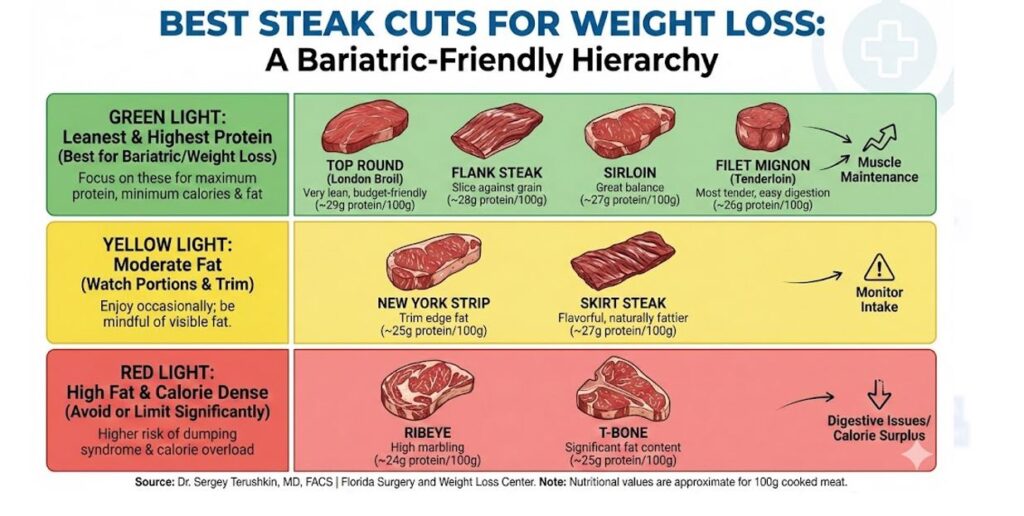

Bariatric-friendly steak cut chart titled 'BEST STEAK CUTS FOR WEIGHT LOSS' by Dr. Sergey Terushkin. It uses a traffic light system: Green for leanest cuts (Top Round, Flank, Sirloin, Filet Mignon) for muscle maintenance, Yellow for moderate fat cuts (NY Strip, Skirt Steak) to monitor, and Red for high-fat cuts (Ribeye, T-Bone) to avoid due t

The Steak Hierarchy: Best to Worst for Weight Loss

The nutritional difference between a Filet and a Ribeye is massive. Here is how common cuts stack up per 100g (cooked):

The “Green Light” Cuts (Leanest & Highest Protein)

These cuts pack the most protein per calorie.

  1. Top Round (London Broil): ~29g Protein / Low Fat. A budget-friendly, lean option.
  2. Flank Steak: ~28g Protein. Very lean, but must be sliced against the grain for tenderness.
  3. Sirloin: ~27g Protein. The perfect balance of flavor and leanness. A staple for bariatric diets.
  4. Filet Mignon (Tenderloin): ~26g Protein. The most tender cut, making it the easiest for gastric sleeve patients to digest.

The “Yellow Light” Cuts (Moderate Fat)

Enjoy these occasionally, but watch your portions. 5. New York Strip: ~25g Protein. Trim the visible fat off the edge before cooking. 6. Skirt Steak: ~27g Protein. Flavorful but naturally fattier; often used in fajitas.

The “Red Light” Cuts (High Fat & Calorie Dense)

These cuts have significant “marbling.” 7. Ribeye: ~24g Protein / High Fat. 8. T-Bone: ~25g Protein / High Fat.

  • Why avoid these? A Ribeye can have nearly double the calories of a Sirloin due to fat content. For gastric bypass patients, this excess grease can trigger dumping syndrome or nausea.

Does Cooking Destroy the Protein?

A common myth is that cooking meat “kills” the protein. The Truth: Cooking steak does not significantly reduce protein content. Because cooking removes water weight, the protein actually becomes more concentrated per ounce.

A Note on Texture (Crucial for Bariatric Patients): While the protein remains, the texture changes. Overcooking steak (Well Done) tightens the protein fibers and removes moisture, making the meat tough.

  • Post-Op Warning: Tough, dry meat is the #1 cause of the “stuck” sensation after bariatric surgery. We recommend cooking the steak to Medium and cutting it into tiny, eraser-sized pieces.

Healthy Ways to Prepare Steak

To keep your steak “weight-loss friendly,” follow these rules:

  1. Ditch the Butter: Restaurants often finish steaks with butter. At home, grill, broil, or pan-sear using a small amount of avocado oil spray.
  2. Flavor with Rubs: Steak sauces are often hidden sugar bombs. Use dry rubs (garlic powder, rosemary, smoked paprika, salt, pepper) for zero-calorie flavor.
  3. The “Veggie Swap”: Instead of mashed potatoes, pair your steak with:
    • Roasted asparagus or broccoli (fiber keeps you full).
    • Quinoa (adds texture and fiber).

before and after banner - medical weight loss

Can You Eat Too Much Steak?

Yes. Balance is key.

  • Saturated Fat: Red meat is higher in saturated fat than fish. Excess consumption can raise cholesterol levels, which we monitor closely.
  • Constipation: A high-protein diet without fiber is a recipe for constipation—a common side effect of GLP-1 meds. Always eat your veggies!

The Recommendation: Limit red meat to 1–2 times per week and rotate with fish, chicken, and plant-based options.


mounjaro telehealth virtual consultation weight loss shots

Conclusion: Muscle Maintenance is the Goal

Whether you are losing weight via Tirzepatide or recovering from a Gastric Sleeve, preserving muscle mass is vital. Steak can be a delicious, high-protein food if you choose the right cut.

Struggling to hit your protein goals? If you find it hard to eat enough protein due to appetite suppression, contact our nutrition team. We can help you adjust your diet to ensure you are nourishing your body properly.

Florida Surgery and Weight Loss Center Dr. Sergey Terushkin, MD, FACS

📞 (954) 551-3508 📍 1911 Harrison Street, Hollywood, FL 33020


Frequently Asked Questions (FAQ)


Medical Disclaimer

Educational Purposes Only: Content on this site is for informational purposes only and is not a substitute for professional medical advice, diagnosis, or treatment. Always consult Dr. Terushkin or a qualified dietitian regarding your specific dietary needs.


Useful Links


Skip to content